TL;DR
AI now helps almost every sales team research, write and plan, so the tools alone no longer set anyone apart. The advantage comes from the information behind them, and the richest information about a buyer is shared face to face. Buyers also still turn to people when it’s time to decide, which makes in-person conversations more valuable as AI spreads.
AI has moved into almost every part of selling. It researches accounts, drafts emails, summarizes calls and suggests what to do next. By 2027, 95% of sellers’ research workflows are expected to begin with AI, up from less than 20% in 2024.
At UNBOUND in Boston this September, where the momencio team spent three days on the show floor, AI was part of almost every session on stage. Yet the most useful moments of the week happened face to face, in conversations at the booth and around the event.
That raises a question every sales leader will face sooner or later. If every team can use the same AI tools, where does the advantage come from? More and more, the answer lies in face-to-face sales conversations.
Why does AI in sales depend on good information?
AI tools can only be as useful as the information they’re given, so thin or missing context leads to advice that sellers don’t trust. 66% of sales leaders report low trust in AI-generated insights within their organizations, and the root cause is missing context. Recommendations that ignore the details of a specific deal feel generic or wrong, so sellers stop using them. The same research found that trust in AI tools drops by 60% when sellers doubt the accuracy of the data behind them.
The time AI saves only pays off when it goes somewhere useful. On average, AI saves sellers 4.8 hours a week, yet 72% of sales organizations put little of that time back into high-value selling. Those that do are 2.2 times more likely to exceed their customer growth goals.
Capable AI is now available to everyone. What sets teams apart is the information behind it, and some of the richest information about a buyer comes from a conversation.
Where does the most valuable sales information come from?
Much of the most valuable information about a buyer comes from conversation, when they explain their problem, their timeline and who else is involved in their own words. None of that appears in a badge scan or a form. It’s said out loud, often in a busy room, to one person.
This is first-party intent data in its most direct form, because it comes straight from the buyer. It’s also the easiest information to lose. A rushed note such as “interested, send info” is often all that survives the trip home, and a name and a company are often all that reach the CRM.
As more of the sales process runs on AI, these spoken details grow in value. They’re the context AI tools can’t find anywhere else, and buyer intent starts to fade the moment the conversation ends.
Do B2B buyers trust AI or sales reps more?
Buyers use AI to research, but when it’s time to decide, most still turn to a sales rep. In a survey of 645 B2B buyers, 45% said they used generative AI during a recent purchase, mostly to gather information on vendors and products. Yet 69% of buyers prefer to check AI-generated insights with a sales rep.
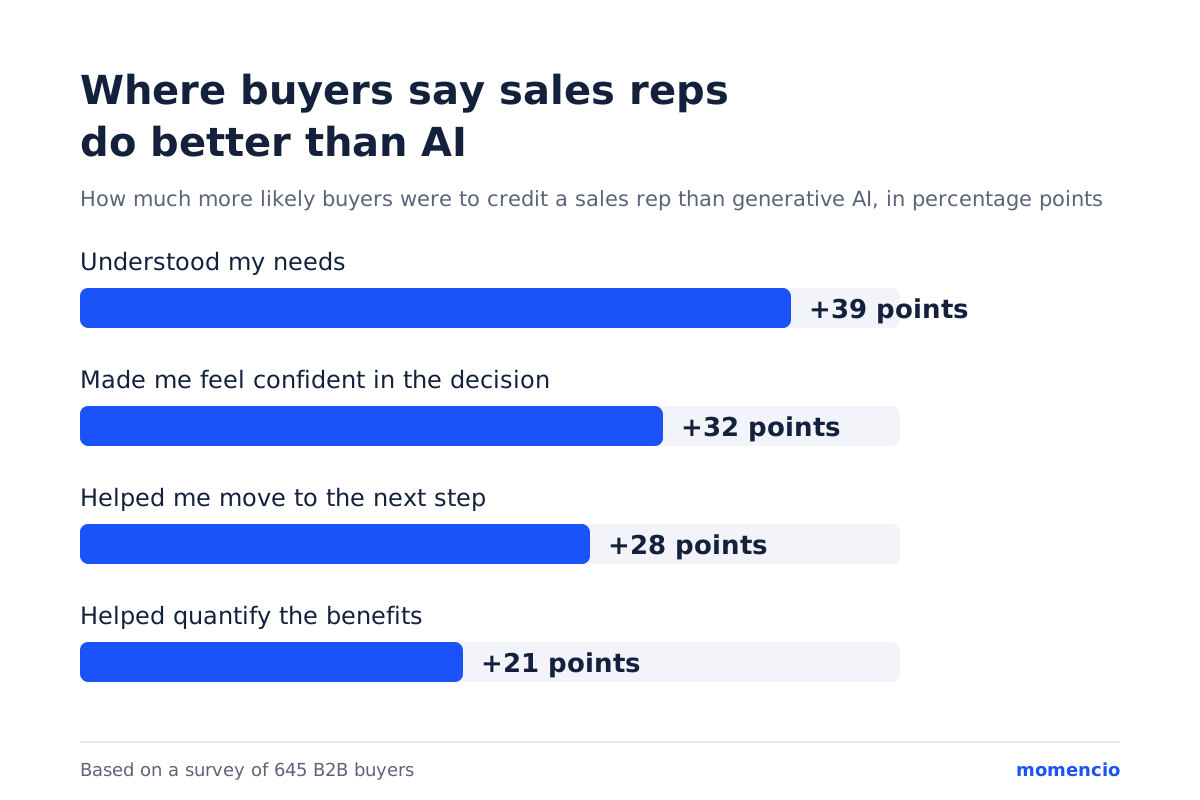
When buyers compared the two directly, reps came out well ahead on the things that decide a purchase. Buyers were 39% points more likely to say a rep understood their needs than generative AI, and 32 points more likely to say a rep made them feel confident in their decision.
AI makes research faster. People still bring the understanding and confidence a buyer needs before they commit.
Why does meeting buyers in person build trust?
Time spent together helps buyers feel understood and confident, and research links more time with sellers to smoother buying and better deals. Buyers who spent more time with supplier reps reported the least dysfunction in their buying process, and buying groups with low dysfunction were 13 times more likely to report a high-quality deal.
Event teams are moving in the same direction. Nearly 70% of event leaders are running fewer events while protecting the attendee experience, and most plan more small networking events and in-person gatherings of under 200 people. The aim is more meaningful time with the right people.
That’s where trust tends to form, face to face and with enough time to understand each other. It’s also where buyers share the details that matter most, which is why what happens to those details next matters so much.
What is Field Revenue Intelligence?
Field Revenue Intelligence is an approach that turns every in-person conversation into a lasting record of what a buyer said, did and engaged with, so sales teams can see the full path from the conversation to revenue.
It starts from a simple observation. Most event tools create a snapshot. Someone is scanned, a few notes are added, and the record stays much the same from then on. After a hundred events, a team ends up with a hundred separate snapshots and very little idea of what happened next.
momencio is built around a different idea – the event is where the intelligence starts. At the event, the record captures the person along with the context that matters, including how they were qualified, what they were interested in and the notes from the conversation. After the event, that same record keeps growing. The content the buyer opens, how long they spend with it and what they engage with next are added to the same person over time, and their score changes as their interest does. When website tracking is connected, their later visits can become part of the picture too.
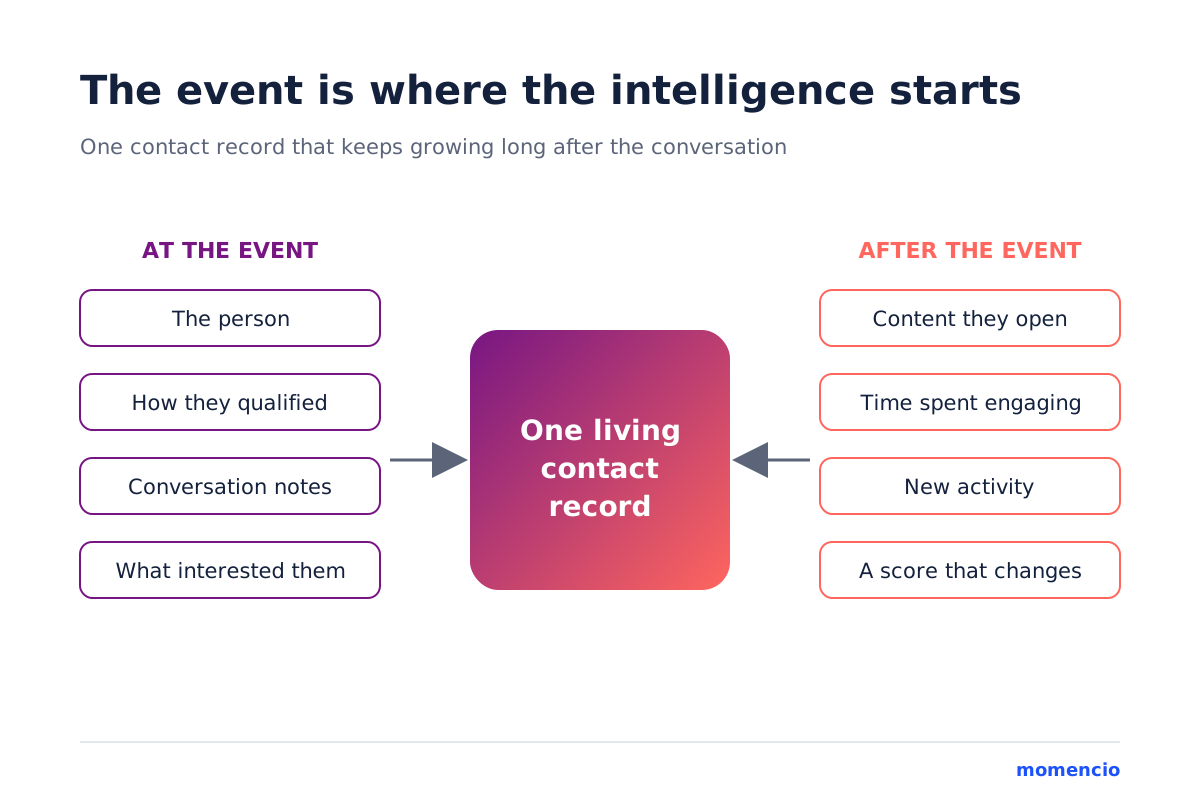
For sales teams, this brings the stretch between the conversation and revenue into view. They can see what actually happened in the conversation, what the buyer engaged with afterward and when their interest changed. That’s the context sales needs to act, and the kind of information AI tools need to give advice sellers can trust.
momencio is a Field Revenue Intelligence platform. Events are the entry point, and the same approach carries through customer visits, roadshows and every meeting that happens face to face.
The bottom line
AI will keep getting better at research, writing and suggesting next steps. What it can’t do on its own is sit across from a buyer and hear what they really need. The teams that capture those conversations fully, and keep learning from them after the event, will be the ones whose AI has something real to work with.
Frequently asked questions
- Can AI replace face-to-face sales conversations?
- AI can speed up research, writing and planning, but it can’t sit across from a buyer and hear what they need. In a survey of 645 B2B buyers, 69% said they prefer to check AI-generated insights with a sales rep, and buyers were far more likely to say a rep understood their needs.
- Why do AI sales tools need information from in-person conversations?
- AI tools give better advice when they know the details of a deal. In-person conversations are where buyers share those details, such as their problem, their timeline and who else is involved, so recording them gives AI the context it needs.
- How are B2B buyers using AI when they buy?
- Buyers mostly use AI to gather information on vendors and products. In a recent survey, 45% of B2B buyers said they used generative AI during a purchase, while most still preferred to confirm what it told them with a sales rep.
- What is a living contact record?
- A living contact record starts when a buyer is met at an event and keeps growing afterward. It holds the conversation, the qualification and the notes, then adds what the buyer engages with over time, so sales can see how their interest changes.
- How is Field Revenue Intelligence different from event lead capture?
- Event lead capture records who someone is at a single moment. Field Revenue Intelligence treats that moment as a starting point, connects event marketing with sales, and keeps the record growing until the path to revenue is clear.
Want to see how your next event’s conversations can become intelligence your sales team can act on? Book a demo.