A sales rep spends an hour with a potential customer at the customer’s office. The buyer says the current system keeps failing, that a decision is due before the end of the quarter, and that the finance director has to approve the purchase. The rep leaves feeling good about the meeting and types a short note into the CRM, the system where the company keeps its customer records: “Good meeting, interested, send proposal.”
Three weeks later, a sales manager opens that record while preparing a forecast. The note is accurate, but it says nothing about the failing system, the deadline or the finance director. The manager cannot tell whether the deal is close or stalled, and the only way to find out is to ask the rep to remember a conversation from three weeks ago.
The meeting went well. What the team kept from it is where the problem lies, and that gap is what field sales intelligence is meant to close. This article explains what field sales intelligence is, how it differs from the tools field sales teams already use, and gives you five questions to test how much of it your own team has.
In short: Field sales intelligence is everything a sales team keeps from its face-to-face meetings, in a form the whole team can use. It covers what the buyer said, who else is involved in the decision, what was agreed, what the buyer has done since, and which meetings need attention first. A team has it when its records can answer those five questions without anyone having to remember or ask.
What is field sales intelligence?
Field sales intelligence is the information a sales team keeps from its face-to-face meetings, organized so that everyone on the team can find it and act on it. It covers what the buyer said, who else is involved in the decision, what was agreed, what the buyer has done since the meeting, and which meetings need attention first.
Field sales means selling in person, away from the seller’s own office. The word intelligence is there because the goal goes beyond storing notes. A note is something a person wrote down. Intelligence is information the team can use to decide what to do next, even when the person who attended the meeting is on holiday, has changed roles or cannot remember the details.
What counts as a field sales meeting?
Any meeting in which a seller and a buyer talk in person counts. The most common settings are:
- a visit to a customer’s office, factory or site
- a conversation at a trade show or conference booth
- a stop during a roadshow or a customer event
- a visit to a dealership, showroom or clinic
The setting matters less than what these situations have in common. In every one of them, the most useful information is spoken out loud, in a single conversation, to a single person, and it leaves with that person unless something captures it.
What is the difference between a note and intelligence?
A note records that something happened. Intelligence answers questions. If a colleague who was not at the meeting can open the record and understand the buyer’s problem, the timeline, the people involved and the agreed next step, the team has intelligence. If that colleague has to call the rep to fill in the gaps, the team has a note.
Why does field sales intelligence matter?
Field sales intelligence matters because a meeting is often the one time a buyer explains their situation in their own words, and business purchases rarely depend on a single person. On average, 13 people within the buyer’s organization are involved in a buying decision, according to a survey of more than 16,000 global business buyers.
A rep who meets one of those people hears one point of view. The others will weigh in later, in conversations the rep does not attend. That makes two things especially valuable: knowing who else is involved, and being able to see what the buyer does after the meeting ends.
When a team cannot keep this information, the cost shows up in ordinary ways. The follow-up message is generic, because whoever writes it does not know what the buyer cared about. Managers cannot tell which deals are moving, so forecasts rest on the rep’s memory and optimism. And when a rep changes role or leaves the company, what they learned leaves with them.

The five questions that show how much field sales intelligence your team has
The simplest way to measure field sales intelligence is to test it. Open the record for one recent meeting and ask the five questions below. Score one point for each question the record answers clearly, without anyone having to ask the rep or remember anything. Then repeat the test on four more meetings, ideally with different reps, and average the scores.
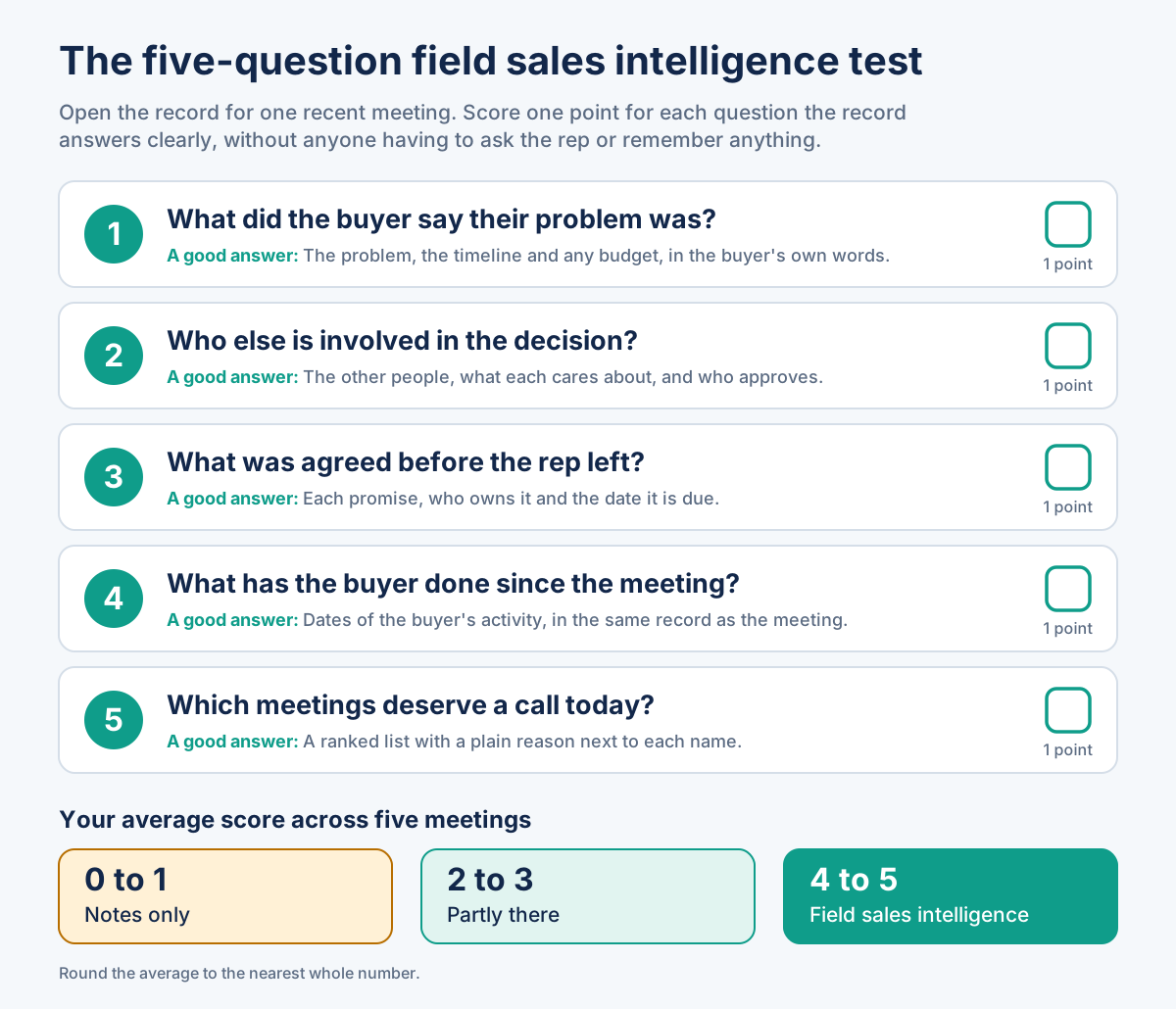
1. What did the buyer say their problem was?
The record should hold the buyer’s problem in the buyer’s own words, along with anything they said about timing and budget. A record that says “interested” tells the team nothing, while a record that says what the buyer wants to fix and by when tells the team how urgent the deal is.
This is the information that buyers share most freely and that teams lose most easily, because it is only ever said out loud. Our guide to collecting buyer information from in-person conversations explains how to record it.
A good answer: the problem, the timeline and any budget the buyer mentioned, written down close to the way the buyer said it.
2. Who else is involved in the decision?
Business purchases involve groups, so the record should show the other people who have a say and what each of them cares about. The person in the meeting may be someone who will use the product rather than someone who approves the purchase, and the record should make that clear.
Buyers usually mention the other people in passing, for example when they explain who has to sign off or who will use the product day to day. Those details are easy to miss when a rep is focused on the conversation, and a record built around a single contact makes it easy to leave them out.
A good answer: the names or roles of the other people involved, what each one cares about, and who gives the final approval. Where a name is still unknown, the record says so.
3. What was agreed before the rep left?
Most meetings end with a promise from one side or both, such as sending a proposal, arranging a demonstration or introducing a colleague. The record should list each promise, who owns it and when it is due. Without that list, promises are kept only as well as the rep remembers them, and buyers notice when one is missed.
Promises are usually made in the last few minutes of a meeting, while people are standing up, saying goodbye or walking to the door. That is the moment least likely to be written down.
A good answer: each promise, the person responsible for it and a date.
4. What has the buyer done since the meeting?
Much of a buying decision happens when the rep is not in the room. The record should therefore show what the buyer did after the meeting, such as whether they opened the material they were sent, came back to it, or passed it to a colleague.
This is the one question a rep cannot answer from memory, because it concerns events that happen after the rep has left. It can be answered only when follow-up material is sent in a way that can be tracked, which is where engagement tracking comes in.
A good answer: dates and times of the buyer’s activity, stored in the same record as the meeting, so the team can see when interest rises and when it goes quiet.
5. Which meetings deserve a call today?
A team that has met many buyers in a few weeks cannot follow up with all of them at once. The record, together with the answers to the first four questions, should help the team decide who to contact first. That can be a score, a flag or a simple ranking, as long as the reason is visible next to each name.
Some platforms can score each contact automatically, using what the buyer has done since the meeting and how closely they resemble customers who bought before. A simple manual ranking also counts, provided it is based on the record rather than on whichever buyer the rep remembers best.
A good answer: a ranked list with a plain reason next to each name.
What does your score mean?
Round the average from your five meetings to the nearest whole number and compare it with these three bands.
- 0 to 1, notes only: The team has a record that meetings happened but cannot rely on it to make decisions. The most useful first step is to capture the buyer’s problem and the agreed next step during the meeting.
- 2 to 3, partly there: Some information survives, usually the answers to the first three questions, but the team still has to guess what happens after the meeting. The next step is to make follow-up material trackable.
- 4 to 5, field sales intelligence: The team can answer almost every question from the record. The work now is to keep it consistent across every rep.
How is field sales intelligence different from other field sales tools?
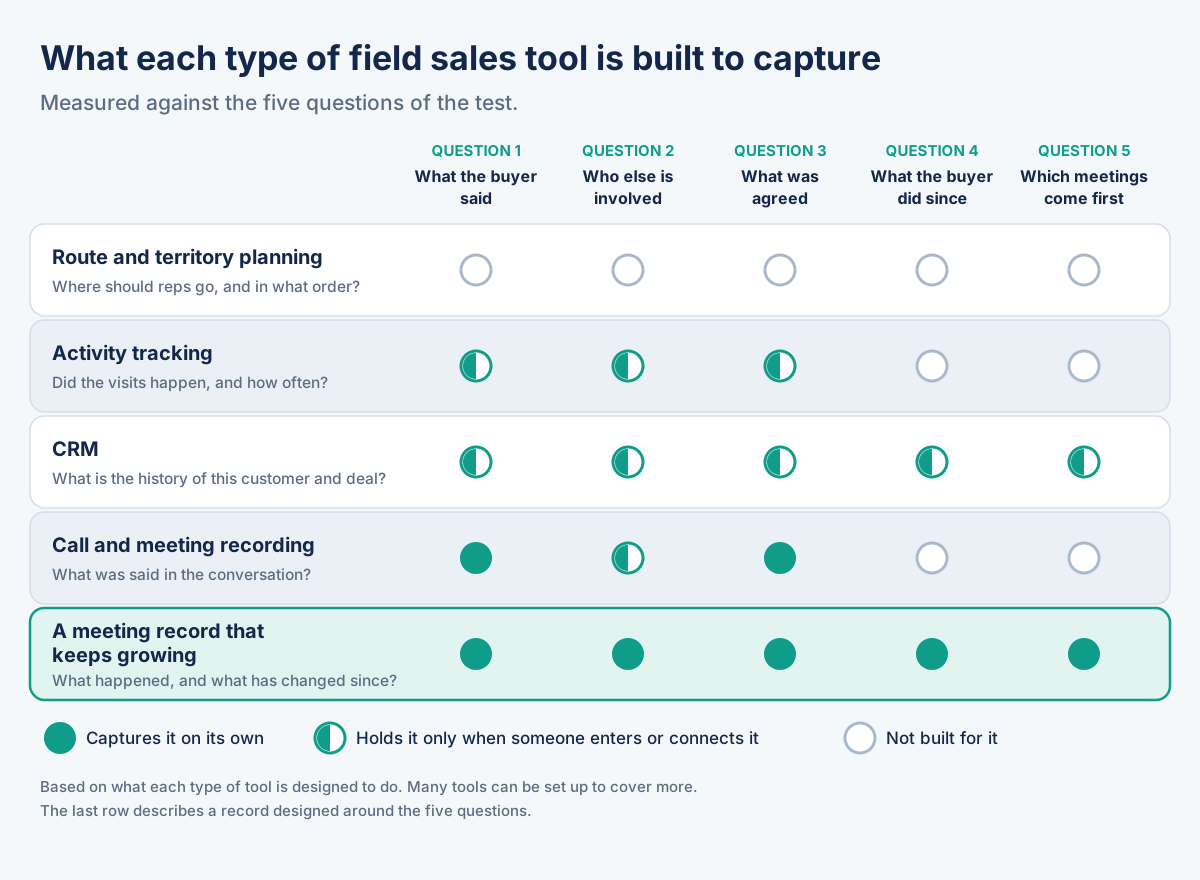
Field sales teams already use several tools, and each one does a useful job. Field sales intelligence does not replace them. It covers the questions they were not designed to answer. The table below shows what each type of tool is built to do.
| Type of tool | The question it is built to answer |
|---|---|
| Route and territory planning | Where should reps go, and in what order? |
| Activity tracking | Did the visits happen, and how often? |
| CRM | What is the history of this customer and this deal? |
| Call and meeting recording | What was said in the conversation? |
| A meeting record that keeps growing | What happened in the meeting, and what has changed since? |
Route and territory planning
These tools help managers divide territories and help reps decide where to go and in what order. They answer the question of where the next visit should happen. They do not record what is said when the rep arrives, so on their own they cannot answer any of the five questions. They work well alongside field sales intelligence, because one decides which meetings to hold and the other keeps what those meetings produce.
Activity tracking
Activity tracking records what reps did, such as check-ins, visit logs, mileage and call counts. It can hold notes the rep wrote, but it measures the rep’s effort rather than the buyer’s response. Our article on activity tracking explains that difference in detail.
How is field sales intelligence different from a CRM?
A CRM is the central record of customers, contacts and deals, and almost every sales team needs one. A CRM stores whatever people put into it, so a short note entered by a rep stays a short note. Field sales intelligence does not replace the CRM. It supplies the CRM with a fuller record: what was said, who is involved and what the buyer did afterwards.
Call and meeting recording
Recording tools capture what is said in a conversation and summarize it. For in-person meetings they work well for the first question and usually for the third. A recording does not show what the buyer does after the meeting, and it cannot tell the team which meetings to prioritize by itself. The rules on recording conversations also differ by country and region, so it is worth checking them before recording a buyer.
A meeting record that keeps growing
This is the form field sales intelligence usually takes in practice. The record starts during the meeting, with the buyer’s answers and the rep’s notes captured on the spot. After the meeting, everything the buyer does with the follow-up material is added to the same record, and the record is shared with the CRM so the wider team sees it where they already work.
momencio is built around this idea. A rep captures the contact and the buyer’s answers during the conversation, adds notes by voice or by typing, and sends a follow-up page made for that one person. The platform then adds the buyer’s later activity to the same record and ranks contacts so the team knows who to reach first.
How do you build field sales intelligence in your team?
You can start building field sales intelligence with the tools your team already has. The five steps below work with almost any setup, although the more of the work a tool handles automatically, the less the reps have to do by hand.
1. Agree on the five questions
Decide as a team that the five questions are the standard for every field meeting, and write them where reps will see them. A shared standard turns a vague request to “keep better notes” into a specific one that people can follow.
2. Capture the answers during the meeting
Information is most complete during the conversation and in the minutes straight after it. A few structured questions answered on the spot, together with a short typed or spoken note, give a better record than a long write-up at the end of the day.
3. Send follow-up material that can be tracked
Share proposals and other material through a page or link made for that one buyer instead of a generic attachment. That lets the team see what the buyer opens and when, which answers the fourth question without asking the rep to do anything extra.
4. Connect the record to your CRM
Make sure the full record reaches the system where the rest of the team works, and not just a name and a note. Otherwise only the rep who created it will ever see it.
5. Test a sample every quarter
Repeat the five-question test on a handful of recent meetings, track the average score over time and share it with the team. A rising score is the clearest sign that the new habits are working.
Frequently asked questions
- What is field sales intelligence?
- Field sales intelligence is the information a sales team keeps from its face-to-face meetings, organized so the whole team can use it. It covers what the buyer said, who else is involved in the decision, what was agreed, what the buyer has done since the meeting, and which meetings need attention first.
- How is field sales intelligence different from sales intelligence?
- Sales intelligence usually means information gathered from outside sources, such as company and contact details, to help a team find and understand the people it could sell to. Field sales intelligence is about buyers a team has already met. It keeps what was learned in those meetings and what the buyer does afterwards.
- How is field sales intelligence different from a CRM?
- A CRM stores customer records, contacts and deals, but it only holds what people enter into it. Field sales intelligence is how the fuller record gets built, with the buyer’s answers captured during the meeting and the buyer’s activity added afterwards. The two work together, and the CRM is where the result is shared with the wider team.
- What information does field sales intelligence include?
- It includes five kinds of information: what the buyer said their problem was, who else is involved in the decision, what was agreed before the meeting ended, what the buyer has done since, and which meetings should be followed up first.
- Does field sales intelligence require recording conversations?
- No. Many teams capture what matters through a few structured questions, short typed or spoken notes, and follow-up material that can be tracked. Recording is one option, and the rules on recording conversations differ by country and region.
- Which teams need field sales intelligence?
- Teams that sell in person, where deals involve several people and more than one conversation, benefit most. Examples include exhibitors at trade shows, teams that visit customer sites, and dealerships. A team that closes simple purchases in a single visit may get by with a short note.
- How do you measure field sales intelligence?
- Open the record for a recent meeting and ask five questions: what the buyer said, who else is involved, what was agreed, what the buyer has done since, and which meetings need a call first. Score one point for each question the record answers clearly. Repeat the test on five meetings and average the scores, where an average of 4 or 5 means the team has field sales intelligence.
The bottom line
Every field meeting produces some of the most useful information a sales team will ever get about a buyer, and most of it is spoken out loud in a single conversation. Field sales intelligence is what happens when a team keeps that information, keeps adding to it after the meeting, and makes it easy for everyone to use. The five-question test shows how close your team already is and which gap to close first.
At momencio, this approach is called Field Revenue Intelligence. Events are one place it starts, and the same record can follow a rep through customer visits, roadshows and every other meeting held face to face.
Want to see how a meeting record that keeps growing works in practice? Book a demo.