
The conversation at the booth ends. A rep sends a one-pager, emails a brochure link, or hands over a case study. The prospect walks away.
What happens next remains invisible. Whether the prospect opened the content, spent time on the pricing page, or came back to the case study two days later — none of that information returns to the rep. The follow-up call happens without it. The pitch is templated. The timing is a guess.
This is not a minor inconvenience. For exhibiting teams spending $10,000 to $30,000 per booth, the content shared after that conversation is the only thing that stays in the prospect’s hands after the event ends. If you cannot see what they do with it, you are navigating the most important stage of the follow-up window completely blind.
The moment the conversation ends, visibility disappears
Most post-event workflows are built around lead capture, CRM uploads, and follow-up email templates. Very few are built around the question that actually determines pipeline velocity: what did the prospect do with the content you shared after the event?
When a rep attaches a PDF to a follow-up email, that content becomes invisible the moment it is sent. There is no read receipt for a case study. There is no engagement signal for whether the prospect spent time on the pricing section, skimmed the first page, or never opened the file at all. The rep’s only option is to send a follow-up based on the booth conversation alone, which fades quickly in a prospect’s memory alongside twenty other vendor interactions from the same event.
This is not a gap most teams have closed. It exists as a structural problem inside the standard post-event workflow, and it is costing deals at the stage where pipeline is actually built.
Why this matters more than follow-up timing
A significant amount of attention in event marketing goes toward when to follow up. The 24-to-48-hour window, the seven-day cadence, the optimal day and time to send the first email. All of that matters, but it answers the wrong question first.
The more important question is what to say. And the answer to that question depends entirely on what the prospect has engaged with since leaving the booth.
A rep who calls on day three without any content engagement signal is making a cold call with a warm introduction. A rep who calls knowing the prospect spent 11 minutes on the technical spec sheet and returned to the pricing overview the following day is having a completely different conversation. One is guessing. The other has context that changes everything from the opening line forward.
According to Cvent’s trade show statistics, 94% of marketers believe their company fails to convert event leads into opportunities. The gap is not effort or follow-up speed. It is intelligence — specifically, the behavioral intelligence that tells sales what a prospect actually cared about after the booth conversation ended.
What content engagement visibility actually looks like
Content engagement visibility means knowing, at the asset level, what a prospect did with your materials after you shared them.
That means a rep can see which documents or pages a prospect opened and when they opened them, how long they spent on each asset or section, whether they returned to specific content on a different day, and which parts of a document held attention longest. The data is tied to an individual lead record, not aggregated across a cohort. It reflects a specific person, a specific booth conversation, and a specific content experience created for that interaction.
This is different from knowing that your one-pager gets high open rates across the campaign. That is content analytics. What event teams need is individual behavioral intelligence — the kind that tells a rep, before they pick up the phone, that this particular prospect revisited the customer story three times and downloaded the implementation guide on a Thursday afternoon.
When that level of visibility exists, follow-up becomes precision work rather than guesswork. The rep knows what to reference. The conversation starts with relevance, not recap.
Where the standard post-booth content chain breaks down
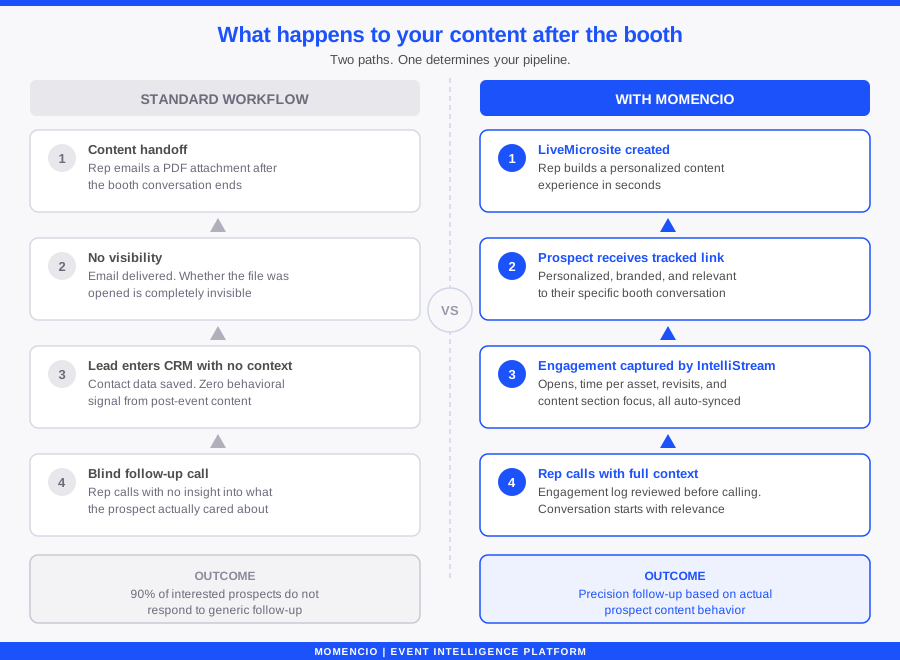
The default post-event content workflow has four steps, and it loses signal at every one of them.
First, the rep shares content at the booth — usually verbally or via a quick digital handoff — with no record of which specific assets were discussed or which topics generated the most interest in the conversation.
Second, a follow-up email goes out after the event, typically templated, with one or more PDF attachments. The email may get an open. The attachment is invisible from that point forward. Nobody knows whether the prospect opened the file, how long they spent on it, or what they looked at most carefully before closing it.
Third, the lead lands in the CRM with contact data, a lead score, and maybe a few notes written from memory. No content engagement data travels with it. Sales inherits a record with no behavioral context — a name, a company, and a guess about intent.
Fourth, the rep calls. Without knowing what the prospect has done with the content since the event, the call is templated by default. The rep covers the same ground they would with any lead at the same stage, even if the prospect has already spent significant time evaluating specific materials.
Industry data shows that 90% of trade show visitors who expressed genuine interest at a booth do not respond to standard follow-up. The content was shared. The interest was real. The follow-up had no way to connect with what the prospect was actually thinking about after they left.
What changes when you can see prospect content behavior
Consider two reps following up with leads from the same event.
Rep A sends a follow-up email with an attached overview deck, waits three days, and calls with a standard intro and product summary. The prospect has already read the case study twice and returned to the pricing comparison on their own, but Rep A has no idea. The call starts at the beginning. The prospect has already moved past the beginning. The conversation stalls.
Rep B sends a tracked follow-up with the specific content discussed at the booth. Before calling, Rep B checks the engagement log: the prospect opened the microsite within four hours of receiving it, spent most of their time on the customer story, and returned two days later to review the implementation section. The call opens with a direct reference to exactly those sections. It is a different conversation from the first sentence.
Content engagement data also changes how teams prioritize. A prospect who never opened the follow-up content gets a lighter touch and moves into a longer nurture track. A prospect who returned three times to decision-stage content gets routed to sales immediately. The prioritization is driven by behavior, not by how enthusiastic someone seemed at the booth.
Marketing benefits here too. When teams can see which content assets drove the most post-event engagement across all leads, they can build a smarter content library for the next event — one based on what actually held attention, not what performed well in a generic campaign.
How LiveMicrosites and IntelliStream make this possible
Closing this visibility gap requires two things: a trackable way to deliver content after the booth conversation, and a system that surfaces and syncs the resulting behavioral data where sales can act on it.
momencio’s LiveMicrosites replace the untracked PDF attachment with a personalized, lead-specific content experience. A rep creates a microsite in seconds after the booth conversation, pulling in the exact assets that were discussed. The prospect receives a single link to a branded, mobile-friendly page built around what they actually asked about — not a generic content hub.
From that point forward, every interaction is tracked. When the prospect opens the microsite, which sections they spend time on, how long they review each asset, whether they return on a subsequent day — all of that activity is captured automatically and tied to the individual lead record.
IntelliStream surfaces this post-event behavioral data in real time, organized by lead. A sales rep opens a record and sees exactly what that prospect has done since the microsite was sent: which assets engaged them, when they came back, and how their engagement pattern maps to buying stage. The record updates continuously. No manual entry. No lag between engagement and visibility.
All of this syncs continuously to the CRM, so the behavioral context travels with the lead record into the rep’s existing workflow. Sales does not need to log into a separate system or pull a separate report. The intelligence arrives where they already work, alongside the contact data and conversation notes already captured at the booth through momencio’s lead capture and Smart Notes features.
This is the workflow the standard post-event stack cannot produce. It does not add complexity. It replaces the untracked content handoff with a trackable one, and puts the resulting signal exactly where event lead follow-up can use it most.
What this looks like at scale
A single rep managing 30 follow-up leads can use content engagement data to prioritize which calls to make first and which leads to move into lighter nurture. At scale, the impact is larger and more strategic.
Across an event team of 15 reps handling several hundred booth conversations, content engagement data becomes the filtering layer that turns a raw lead list into a prioritized pipeline. Marketing can see which content assets drove the most re-engagement across all leads, not just which ones were shared most often. Event dashboards surface which shows and which conversations generated the highest post-event activity. CRM records arrive enriched with behavioral context rather than just contact data and a lead score.
The event program generates intelligence rather than just a list of names. Badge scans tell you who visited. Content engagement tells you who came back — and what they cared about when they did. That distinction is where trade show ROI actually lives.
The booth conversation is the beginning of the relationship, not the end of it. What happens in the hours and days after that conversation is where most deals are won or lost, and most exhibiting teams are navigating that window without any signal at all.
Content engagement visibility changes that. It gives sales a reason to call, a topic to reference, and a clear sense of where each prospect is in their evaluation. That is what converts an event lead into a pipeline opportunity.
See how momencio’s personalized microsites and IntelliStream work in practice.
Book a walkthrough with the team to see the full post-event engagement workflow.