The job title fix and the work email lookup are settled questions. The one worth asking is what your booth team does with everything else event lead data enrichment hands you, because most teams do almost nothing with it. Every use below sits inside work you already do at a show, and not one of them is about cleaning up a contact record.
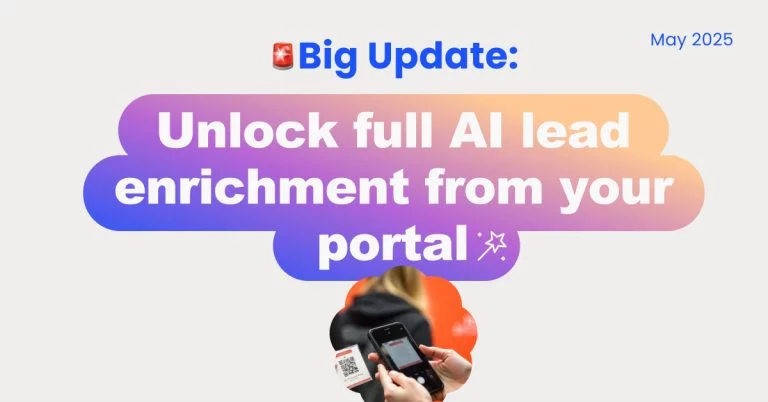
A quick word on what you are working with. momencio’s AI EdgeCapture™ enriches each scan with the person’s job title, work email, LinkedIn profile and description, and phone number, and it adds company details such as industry, employee size, website, and headquarters location whenever it can match the company. Most reps look at that profile, confirm the email is real, and move on. The data becomes far more valuable when you point it at three jobs you already do at every event: screening the people you meet, matching them to what your company already knows, and planning where to spend your time and budget next.
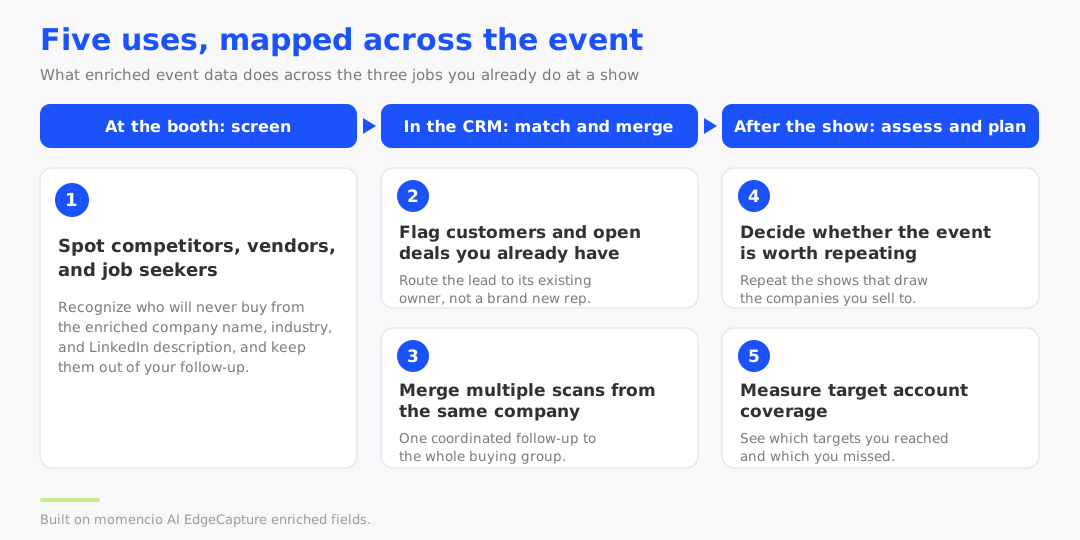
Spot competitors, vendors, and job seekers before they reach your follow-up
Plenty of the people who scan at your booth will never buy from you. Competitors walk the floor to study your messaging and pricing, agencies and service providers stop by to sell you something, and job seekers hand over a badge hoping to talk about openings. On a raw scan, every one of them looks the same as a real buyer, which is how they slip into your nurture sequence and onto a rep’s call list for the week after the show.
Enriched company data gives you a quick way to catch them in the moment. The company name, industry, website, and LinkedIn description that AI EdgeCapture pulls in usually make it clear when a scan belongs to a direct competitor, a marketing agency, or someone whose company has nothing to do with what you sell. The LinkedIn description is the field reps most often skip, since a job title on its own rarely gives a competitor away while a one-line summary of what the company does usually will.
One caution is worth building into the rule. Not every company that shares your space is a competitor. Channel partners, resellers, and possible integration partners can look almost identical to a rival on paper, so decide in advance which of those you want to keep and which you want to drop, and let the enriched company description settle the close calls. The point is to make the decision once, as a team, rather than leaving each rep to guess in the middle of a busy floor.
Turn this into a simple habit rather than a judgment call. Agree on a short tagging rule before the doors open, such as tagging and dropping any direct competitor or any inbound vendor, and have the team apply it as the enriched profiles come through. You keep those contacts out of your follow-up, you avoid the genuinely costly mistake of emailing a competitor your latest deck, and your reps spend their follow-up time on people who can actually sign a deal.
Flag the customers and open deals you already have before a rep cold pitches them
Nothing damages a relationship faster than sending a current customer an email that introduces your company as though you have never met. It happens because a booth scan looks like a brand new lead, and with nothing more than a name and a personal email, your CRM has no way to know any better. The same gap lets a fresh rep start pitching an account that one of your senior sellers is already deep in conversation with.
A verified work email and a matched company record are what let your CRM recognize the scan for what it is. Once event lead data enrichment fills in the business email and resolves the company, your system can check that contact against your existing accounts and open opportunities, then hand it to the person who already owns the relationship instead of routing it to someone new. The detail that makes or breaks this is the order of operations. Let AI EdgeCapture finish enriching before the lead syncs to your CRM, because the account match only works once the verified email and company are actually in the record. Get that sequence right, and a familiar customer lands quietly with their account owner while a live deal picks up where it left off, with none of the awkwardness of a cold introduction to someone you already know well.
This matters most for your highest-value relationships. Two reps working the same account without knowing it, or a renewal conversation interrupted by a stranger pitching the basics, costs you far more than a single missed lead ever would. Catching those cases at the point of capture keeps your most important accounts in steady hands.
Merge the people you scanned from one company into a single follow-up
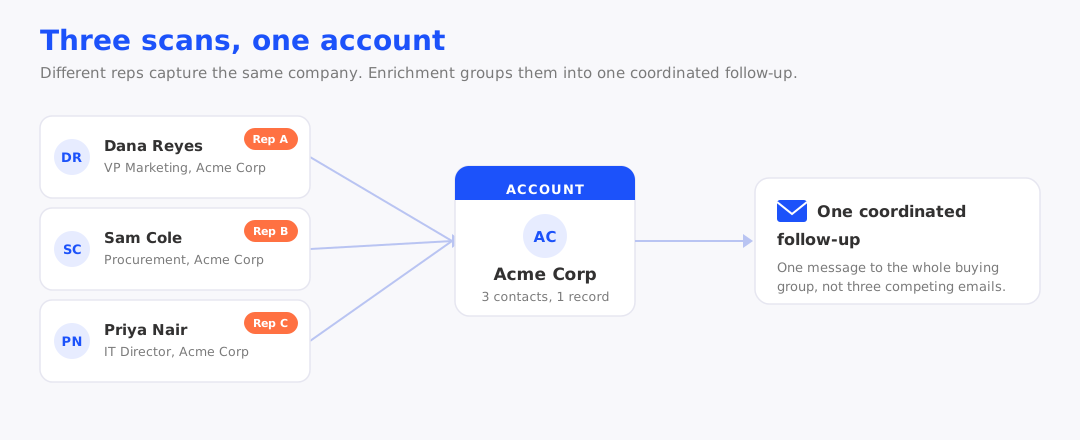
A booth staffed by three people will often scan the same company two or three times in a single day without anyone realizing it. Each rep captures a different contact, each writes a separate follow-up, and the buying group at that company ends up with three unrelated emails from your team in the same afternoon. To the people receiving them, that looks like a company whose left hand has no idea what its right hand is doing.
Because AI EdgeCapture resolves every scan to a company record, you can group those contacts by company and treat them as the single account they really are. Sort your captures by company rather than by rep at the end of each day, and the duplicates surface on their own. Hand the whole group to one owner who sends a single coordinated message that acknowledges everyone your team met and speaks to the company as a whole. The buying group hears from you once, with a message that sounds informed and deliberate, which is a far stronger first impression than three reps competing for the same inbox.
Use who actually showed up to decide whether the event is worth repeating
Most teams decide whether to book a booth again from a gut feeling about how the show felt, backed by a raw lead count that says nothing about quality. For a line item that often runs into tens of thousands of dollars, that is a thin basis for the call.
Your enriched lead data gives you a far better one. Look at the full set of leads you captured and read the spread of company industries, employee sizes, and locations as a single picture of who the event actually put in front of you. When most of those companies match the profile you sell to, the show earned its spot on next year’s calendar and you can say so with evidence. If instead the floor was full of the wrong industries or companies far too small to buy what you offer, you have a clear reason to cut the event or shrink your footprint, rather than relitigating impressions in a planning meeting. Used this way, event lead data enrichment becomes an input into which shows you choose, not only a tool for working the leads after them, and it gives whoever holds the event budget a number they can actually defend.
The simplest way to make this repeatable is to settle on one figure, the share of captured companies that fit the profile you sell to, and track it for every show you work. A show where seven in ten companies fit is a very different decision from one where two in ten do. Once you have that figure for several events side by side, your calendar starts to sort itself, and the conversation with finance shifts from opinion to a number everyone can see.
Measure how many of your target accounts reached your booth
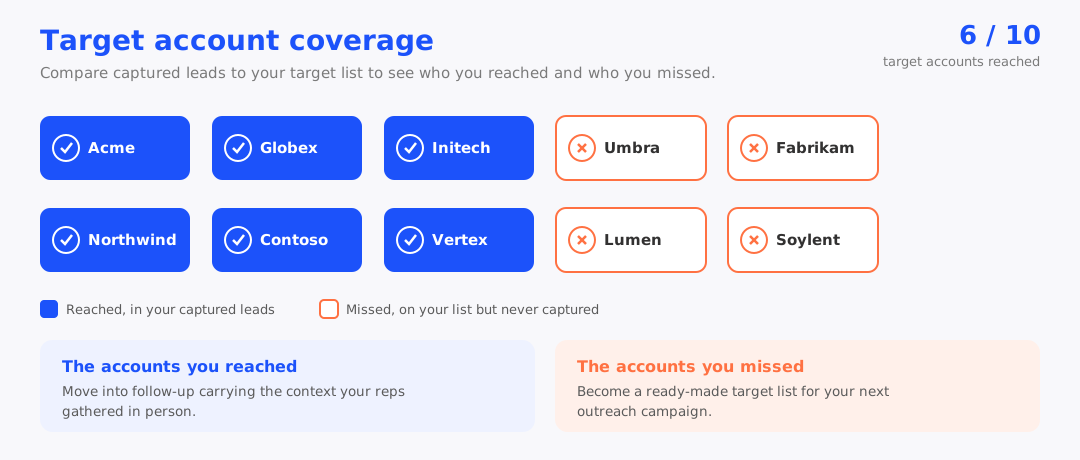
If your company runs account-based marketing, you arrived at the show with a named list of the accounts you most want to win. What you usually cannot tell is how many of them actually came by your booth, because a busy floor turns the day into a blur of scans and conversations that are hard to reconcile against that list afterward.
Enriched company data lets you answer the question plainly. Compare the companies in your captured leads against your target account list, and your real coverage comes into focus: the targets you reached, and the ones who walked the show but never stopped with you. Both sides of that are worth money. The accounts you reached move into follow-up carrying the context your reps gathered in person, and the accounts you missed become a precise list for sales to pursue by email, on LinkedIn, or with a direct call. Run the comparison within a day or two, while those companies are still on-site or still in town, and a vague sense of a good show turns into a specific plan for the accounts that matter most to your number.
That missed list is also the cleanest brief you can hand your demand generation team for the next campaign. Every company on it cared enough about the topic to attend the show, yet has not engaged with you directly, which is about as warm as a cold audience gets. Feeding those names straight into outreach turns a coverage gap into a starting point rather than a disappointment.
Put the enriched data to work
The thread running through all five uses is the same. Event lead data enrichment earns its keep as a layer for screening, matching, and planning, not as a way to tidy a contact card. The very fields that most teams glance at and forget can keep non-buyers out of your pipeline, protect your existing customers from clumsy outreach, organize your follow-up by account, and tell you which shows and which accounts deserve your attention next. AI EdgeCapture produces that data on every scan you take, before, during, and after the event, so the only question left is whether your team puts it to use.
To see how momencio‘s AI EdgeCapture enriches your event leads and feeds these workflows, book a demo.