Event data and event intelligence are not two ends of a spectrum. They are two different things entirely.
Data describes what you collected. Intelligence is what you built from it. That distinction sounds clean on paper, but in practice, most B2B teams treat them as interchangeable — and that is exactly why post-event pipeline so often fails to materialize.
This article explains the difference precisely, and more importantly, shows what it costs when teams confuse the two.
If you haven’t read the earlier pieces in this series: Article 1 defined event intelligence as a structured, actionable output built from behavioral signals — not a synonym for “data you collected at an event.” Article 2 mapped the five layers that separate teams operating on raw data from those generating true sales intelligence. This article shows what that gap looks like in your CRM, and why it persists.
The line, drawn precisely
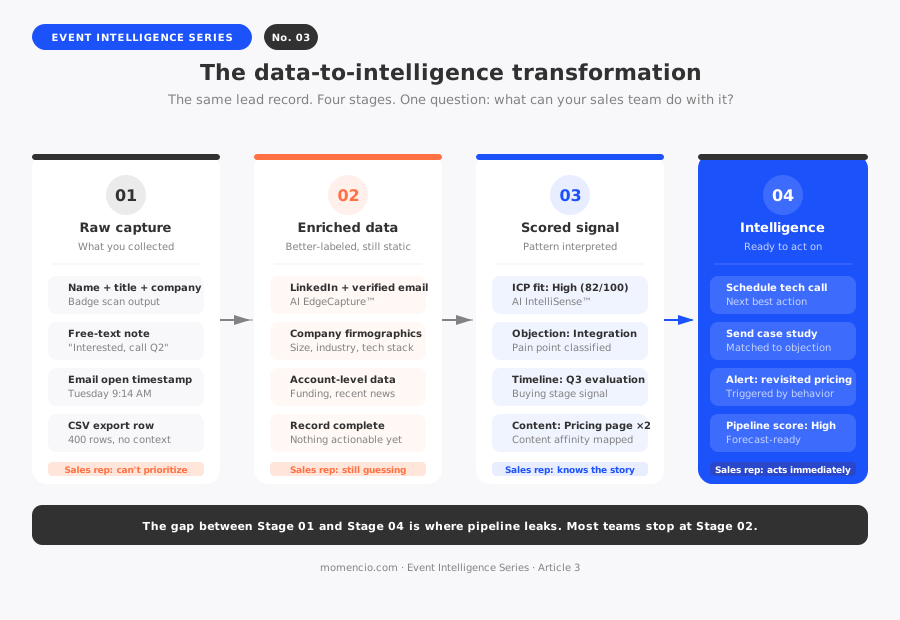
Here is the same event interaction mapped two ways:
| Interaction | Event data gives you | Event intelligence builds |
| Badge scan | Name, title, company, email | ICP fit score, buying stage, account context |
| Rep notes | “Interested in pricing, follow up Q2” | Objection log, pain point category, timeline signal |
| Follow-up email open | Opened at 9:14 AM Tuesday | Content affinity signal — which asset, how long, what next |
| Microsite revisit | Returned 3 times, viewed pricing page twice | High-intent signal — active evaluation, ready for sales outreach |
The left column is not bad data. It is accurate. The problem is that it is not actionable. A sales rep reading “interested in pricing, follow up Q2” cannot personalize a conversation. They cannot prioritize that lead over 200 others. They cannot tell whether this person is a serious buyer or someone who grabbed a pen.
The right column answers the only question that matters to sales: what should I do next, and why?
Why your CRM is full of data but empty of intelligence
Three structural problems keep most teams stuck at the data layer.
Vendors sell on data metrics
Most event tech is measured by leads captured, badges scanned, and contacts synced. These are data metrics. They tell you how much you collected, not whether any of it will convert. When the incentive is collection volume, teams optimize for collection volume — and intelligence never gets built.
Enrichment is mistaken for intelligence
Adding a LinkedIn profile and verified email to a badge scan makes that record more complete. It does not make it actionable. Lead enrichment is a necessary step, but it is still data — better-labeled data. Intelligence requires something enrichment cannot provide on its own: behavioral context from the actual interaction.
Nobody owns the transformation layer
Raw capture goes to marketing ops. Enrichment runs automatically. Then the lead hits a CRM field and stops. The step of turning that structured data into a read-and-act-on-it sales record — the scoring, the context-mapping, the buying stage classification — has no clear owner. So it doesn’t happen. This is precisely where the five layers of event intelligence break down for most teams: the capture layer works, but layers three through five never activate.
The four transformations that turn data into intelligence
These are process decisions. Technology can support each one, but the decision to apply them has to come first.
1. Structuring — captured at the point of conversation
Context recorded during a booth conversation is worth ten times the same context reconstructed afterward. Pain points, objections, buying signals, timeline indicators — if these are not captured in the moment, they are gone or distorted by the time a rep writes them up on Monday. This is the foundation of everything that follows. Without structured capture, there is nothing to score.
2. Scoring — behavioral patterns, not contact completeness
A lead scoring model built for events should weight behavior, not demographics. A director-level contact who scanned your badge and never opened a follow-up is less valuable than a manager who returned to their microsite three times and downloaded a pricing doc. Behavioral scoring at the event level answers: based on what this person actually did, how ready are they?
3. Sequencing — signals triggering action, not reports triggering review
Intelligence is only useful if it produces a next step automatically. A lead who revisits a microsite after four days of silence is sending a buying signal. That signal should trigger an alert — not sit in a dashboard waiting for someone to log in and notice. IntelliStream is designed around this principle: every behavioral event generates a live signal, not a static log entry.
4. Compounding — intelligence that builds across events, not resets
A team that ran ten events last year has ten datasets that, if never connected, are ten dead ends. If connected, they reveal which accounts have engaged across multiple touchpoints, which content consistently drives revisit behavior, and which lead profiles convert fastest. This is the layer most teams never reach — and it is where the gap between event data and event intelligence becomes a durable competitive advantage.
What intelligence-ready data looks like in your CRM
A sales rep opening a lead record that contains event data sees: name, title, company, email, badge scan time, and a note that says “interested, follow up.”
A rep opening a record that contains event intelligence sees: ICP fit score (high), conversation context (budget conversation, Q3 evaluation timeline, objection around integration complexity), content engagement (watched the full platform demo video, revisited pricing page twice in 48 hours), and a suggested next action (schedule technical call, send integration case study).
The second rep does not need to guess. They know exactly what to say, who they are talking to, and why now is the right moment.
The diagnostic question is simple: if your sales team opened a lead record from your last event right now — without any briefing — would they know what to do? If the answer is no, your team has data, not intelligence.
The gap is operational, not theoretical
None of this requires a technology overhaul to begin. It requires a decision: that the purpose of event participation is not to collect contacts but to generate intelligence your sales team can act on.
The teams that make that decision — and build a process around structuring, scoring, sequencing, and compounding — stop measuring events by leads captured and start measuring them by pipeline created.
Use the Event Lead Cost and ROI Calculator to check exactly what your event leads cost you. It takes five minutes and gives you a specific starting point — not a generic recommendation.
This article is part of the Event Intelligence Series by momencio — a 12-part sequence building topical authority around the category of event intelligence.