A trade show booth game is not a marketing decision. It is a qualification decision. The game you run on the floor determines what lands in your CRM the week after the show, and it determines how much of your sales team’s time gets consumed sorting names into people worth calling and people who just wanted the AirPods.
Most of the writing on booth games treats them as traffic engines. Pick a prize wheel, draw a crowd, collect some contacts, everyone wins. That framing is fine if the only metric that matters is scan volume. It is actively harmful if your goal is pipeline.
This piece looks at booth games through the one lens that determines whether they pay back: the kind of lead they produce. Some games filter for the people your sales team actually wants to talk to. Others fill your list with prize hunters and leave your reps with eighty useless records to clear before they find the three worth a conversation. Both categories are called “booth games.” The pipeline outcomes are completely different.
The hidden cost of a wrong-fit game
Start with the math most exhibitors do not run.
A well-promoted prize wheel at a three-day mid-sized show will generate 300 to 500 scans. Research on B2B exhibition gamification from Madeforarcade’s 2026 gamification ROI report, which analyzed multi-day B2B exhibitions across technology, manufacturing, fintech, SaaS, and logistics, shows that well-designed games with qualifying mechanics deliver a 26% higher ratio of decision-makers in the captured contact list compared to generic footfall. The corollary is what matters: games without those mechanics deliver a decision-maker ratio that matches generic footfall, which means most of what you captured was never a buyer.
Take a typical mid-sized show. 400 scans generated by a prize wheel. The show’s attendee base is roughly 60% aligned with your ideal customer profile at best, and the prize wheel attracts a skew toward the non-ICP end of that range because the incentive is universal. Realistically, you come home with around 100 contacts who fit your ICP and 300 who do not.
The 300 non-ICP contacts still require handling. Someone has to de-duplicate the list, enrich the fields the badge did not capture, push the records to the CRM, and then run outbound email and possibly outbound calling through them before marking them disqualified. At a conservative three minutes per contact across that entire flow, the 300 non-ICP records consume about fifteen hours of SDR or marketing ops time in the two weeks after the show. That is nearly two full working days of your highest-cost post-event labor, spent confirming that the leads were never going to buy.
The 100 ICP-fit contacts are the ones that matter, and they are buried in the same export. Every hour your team spends sorting the 300 is an hour they are not spending on the 100. Speed to follow-up is the single biggest variable in whether a trade show lead converts. A prize wheel that delays your team’s contact with their best leads by two days is not a traffic generator. It is a pipeline drag.
This is the cost the SERP does not talk about. It is invisible in the post-show report because it shows up as “low lead quality” rather than as a specific number of wasted hours. But the hours are real, and they are attributable to the booth activity that produced the list.
The filter: four questions any game must pass
Before committing to any game on the floor, run it through four questions. These are the same questions that apply to any booth idea aimed at qualified visitors, applied specifically to the game layer.
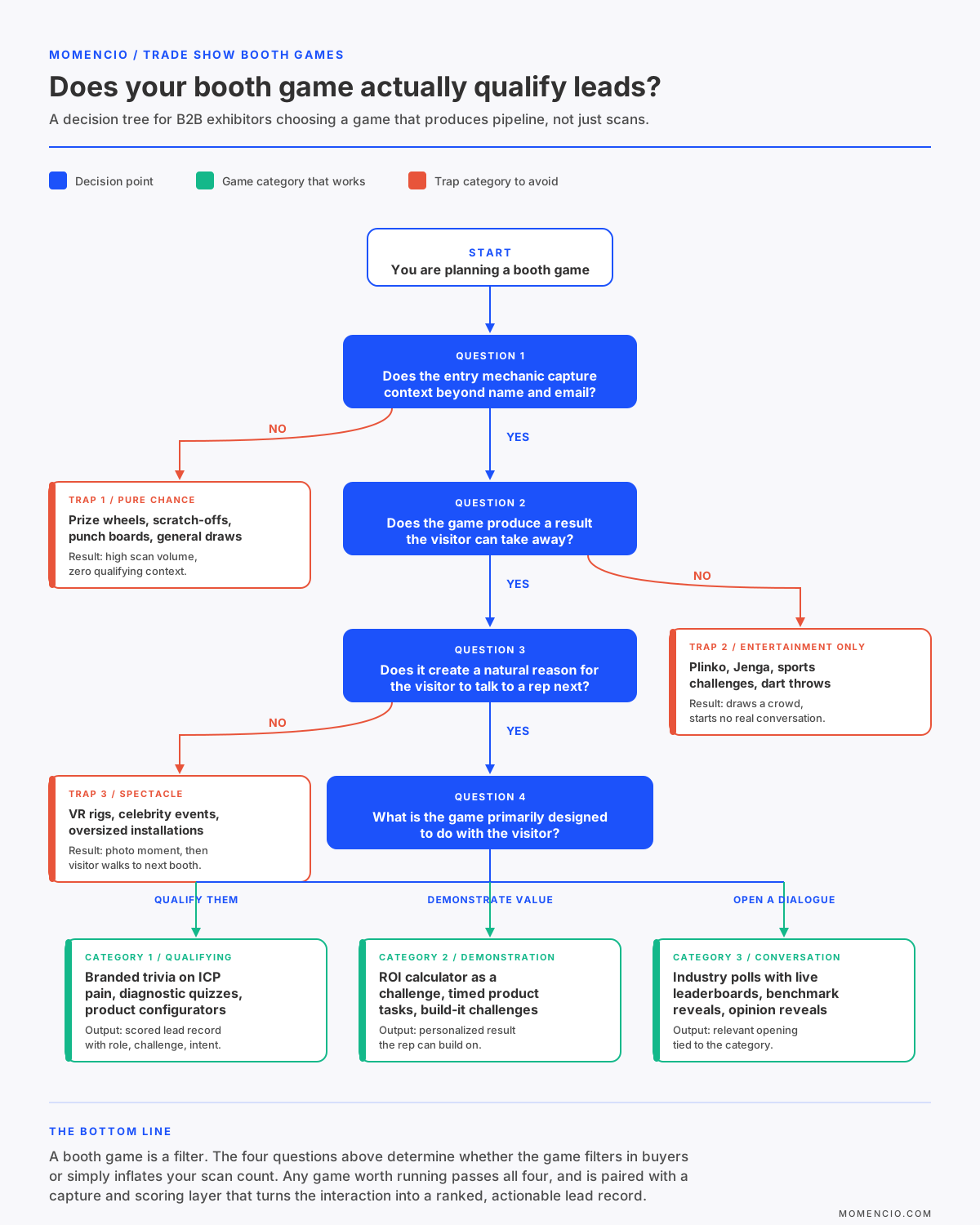
Who specifically does this attract?
Not in broad terms, but in specific ones. A prize wheel attracts anyone within line of sight who likes free stuff. An industry-specific diagnostic quiz attracts operators who recognize the problem and want to test themselves against it. A product configurator attracts people who are active in the market and mentally scoping what they would buy. Each of these fills a different slice of your contact list, and only some of them contain buyers.
What conversation does it start?
The best games are conversation starters, not conversation substitutes. A game that ends when the prize is handed over leaves your rep with nothing to build on. A game that produces a result, a score, or a personalized output gives the rep a specific opening: “You scored 60 on the pipeline health assessment. The average we see from teams your size is 45. Want to walk through where you lost points?” That is a conversation. Handing over a branded pen is not.
What does the visitor have to invest to engage?
Low-barrier engagement attracts low-intent visitors. Spinning a wheel costs the visitor nothing and produces nothing. Answering five specific questions about how their team operates costs them ninety seconds and produces a result they can use. Visitors willing to invest ninety seconds in a game self-select for a level of interest that correlates much more closely with buying intent than a queue for giveaways.
What does the rep do next?
The game and the qualification conversation are not separate. The game should set up the next step, not replace it. If the game ends and the visitor walks to the next booth without speaking to a rep, the game did not do its job regardless of how entertaining it was. The handoff from game completion to rep conversation is where pipeline is won or lost, and most booth games are designed with no thought to that handoff at all.
Three categories of booth game that produce qualified leads
Within the universe of “trade show booth games,” three categories consistently produce leads that sales teams can work. Each of them passes all four filter questions.
1. Qualifying games
Qualifying games embed the qualification inside the play mechanic. The act of playing the game is what produces a scored, context-rich lead record.
A branded trivia game built around the pain points your ICP lives with. Five questions about specific operational problems. Each answer reveals something about the player: the tools they are currently using, the failure modes they recognize, the gap they have not yet fixed. The result at the end is a “diagnostic score” or a category assignment, and the player walks away with something their team will understand. Your capture system walks away with a lead record that already contains most of what a qualifying conversation would have produced.
Diagnostic assessments follow the same logic. A five-minute tablet-based assessment of their current event program, their lead capture stack, their sales pipeline maturity. The visitor gets a benchmarked result. You get a lead record with role, challenge, maturity level, and intent signal already inside it.
Product configurators are the more commercial version of the same pattern. The visitor answers five questions about their context and the tool outputs a recommended configuration, a projected impact, or a sized solution. The conversation with the rep begins with the output in hand, not with a blank discovery call.
2. Demonstration games
Demonstration games let the visitor experience what the product does through a gamified lens. The play mechanic is the demo.
An ROI calculator styled as a challenge. Inputs that feel like a game rather than a form. The player enters numbers from their current program, and the output is a projected improvement at their specific inputs. It attracts buyers actively thinking about justifying spend, it produces a personalized result, and it gives a rep immediate ground to stand on in the conversation that follows.
Interactive product challenges work for exhibitors with a product that can be navigated quickly. A timed task inside the product UI, like “build a follow-up sequence in under 90 seconds,” demonstrates the product and filters for visitors willing to engage with the product itself rather than with a giveaway. Practitioners self-select into this format. Prize hunters do not.
3. Conversation games
Conversation games exist to open a relevant dialogue, not to produce a score. The play is lighter, but the entry mechanic and the rep handoff are what do the heavy lifting.
Branded industry polls with live leaderboards. “How long does your team wait to follow up on trade show leads?” Visitors enter their answer, they see where they stand against the live field of peers, and the rep has an immediate opening tied to the category you want to discuss. The poll itself is light, but the conversation it sets up is where the work happens.
Benchmark reveals work similarly. You collect three inputs from the visitor and show them where they fall against industry data you have pre-loaded. The reveal is the moment. The conversation starts there.
Both formats pass all four filter questions because they attract visitors who are willing to share real information about their situation, they produce a result worth discussing, they require genuine engagement to play, and they end with a clear handoff to a rep.

Three categories that look like games but function as traps
The following three categories dominate the existing “best trade show booth games” lists online. They are the defaults. They are also the categories that produce the specific post-show problem described at the start of this article.
1. Pure chance games
Prize wheels, scratch-off cards, punch boards, general prize drawings. The visitor’s entire transaction with your booth ends the moment the prize is handed over. There is no reason to stay, no conversation that logically follows, and no way to distinguish genuine interest from opportunism in the list you export.
These games are sometimes defended on brand-awareness grounds. The argument is weak for B2B. Awareness without qualification is a cost center. A pure chance game generates scan volume, and scan volume is the metric that looks healthy in a post-show report and produces nothing in pipeline.
2. Entertainment-only games
Plinko, giant Jenga, sports challenges, hole-in-one putting greens, dart throws. These games are fun to watch and fun to play. They draw a crowd. They do not filter, they do not qualify, and they rarely produce a natural rep handoff because the visitor’s attention is on the game, not on the booth.
These formats persist because they photograph well, they generate social moments, and booth managers enjoy hosting them. They are a consumer engagement format deployed in a B2B context, and the mismatch shows up in the post-show lead list every time.
3. Spectacle installations
VR racing rigs, celebrity appearances, oversized immersive installations, photo booths with elaborate backdrops. These can cost tens of thousands of dollars and they can be genuinely impressive. They also tend to produce a specific failure mode: the visitor experiences the installation, takes a photo, and walks to the next booth without speaking to a single rep.
If a visitor can spend two minutes with your booth concept and walk away without talking to your team, the installation did its job as a marketing asset and failed its job as a pipeline activity. For most B2B exhibitors, the installation budget would outperform as investment in pre-show outreach, a well-trained rep team, and a lightweight qualifying game that actually hands visitors to conversations.
The capture layer is what makes any game work
The difference between a game that produces pipeline and one that produces a useless list is not only the game itself. It is also what the game captures during play.
A well-designed qualifying game should leave a lead record with four pieces of information already inside it: who the person is (role, company), what problem they are working on (from their answers), what their current maturity or stack looks like (from the diagnostic outputs), and what signal level they are showing (how they scored, how they progressed, where they dropped off). This is the context a sales rep needs to run an intelligent follow-up. It is also what most scans never capture, which is why most follow-up emails read as mass outreach.
This is where a universal lead capture layer changes the economics of running any game at a booth. The game is the engagement mechanic. The capture is the qualification mechanic. When both are integrated, every visitor who plays produces a structured record with context already scored, which means the post-show list is not 400 identical names but 400 records at varying tiers of priority, ready for follow-up in order.
The follow-up layer matters just as much. A captured lead sent a generic “thanks for stopping by” email three days later loses most of the warmth the game created. A captured lead sent a personalized LiveMicrosite™ within hours of the interaction, with content tailored to the pain point they surfaced during play and the diagnostic result they walked away with, sustains the conversation the booth started. A strong game opens the conversation, and the follow-up is what converts it.
The scoring layer closes the loop. AI IntelliSense™ ranks the post-game lead records against your ICP profile and behavioral signals, so the sales team knows exactly which fifteen of the four hundred to work first. This is what turns a large captured list from a time drain into a prioritized pipeline, and it is the layer that most exhibitors running games do not have in place at all.
A 60-second audit for any game you are considering
Before you commit budget to a booth game, whether it is a vendor-built prize wheel, a custom installation, or a game your agency proposed, run it through these six checks. If a game fails two or more, replace it.
- Does the entry mechanic capture anything beyond contact details? If it only captures a name and email, the game is feeding your follow-up with noise.
- Does the game produce a result, score, or output the visitor can take away? If the only output is a prize, the game ends when the prize is handed over.
- Does the game create a natural reason for the visitor to talk to a rep afterward? If the flow does not include a handoff, you have an engagement activity, not a pipeline activity.
- Does the play mechanic take at least 60 seconds of real engagement? Sub-60-second games attract sub-60-second intent.
- Does the prize or incentive filter for your ICP or for anyone in the venue? A prize that only matters to your target buyer pulls the right audience. A universal prize pulls everyone.
- Does your capture and scoring stack rank the leads the game produces by likelihood to convert? A big list without prioritization is a burden, not an asset.
The goal of any booth game is not entertainment. It is a structured interaction that produces a lead your team can work profitably in the week after the show. When a game is designed around that outcome, and paired with a capture and scoring system that turns the interaction into a ranked, actionable record, it stops being a distraction and becomes one of the highest-leverage plays a small team can run on a busy floor.
Turn your next booth game into qualified pipeline
momencio’s event activations give you branded qualifying games, diagnostic quizzes, and interactive experiences built for B2B lead generation, not just traffic. Every interaction feeds directly into universal lead capture, is scored by AI IntelliSense™, and triggers a personalized LiveMicrosite follow-up while the conversation is still fresh. See how it works.