Your team puts real work into showing up at events — the booth setup, the demo prep, the coordinated pitch. And then you come home with fewer leads than expected, and nobody’s quite sure where they all went.
Here’s the problem: most event teams are running in one mode the entire show — badge scan, face-to-face pitch, scheduled meeting. That’s not wrong, but it only covers a fraction of what’s actually happening around it. Capturing leads at events means paying attention to the moments before someone walks into the booth, after they leave it, and in all the spaces in between where real buying intent is being expressed without a badge scan attached to it.
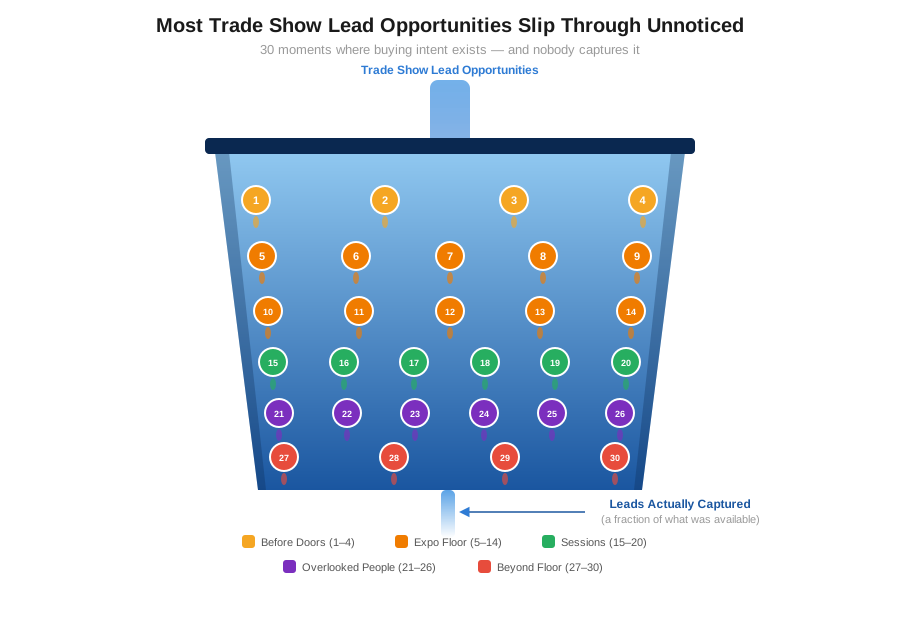
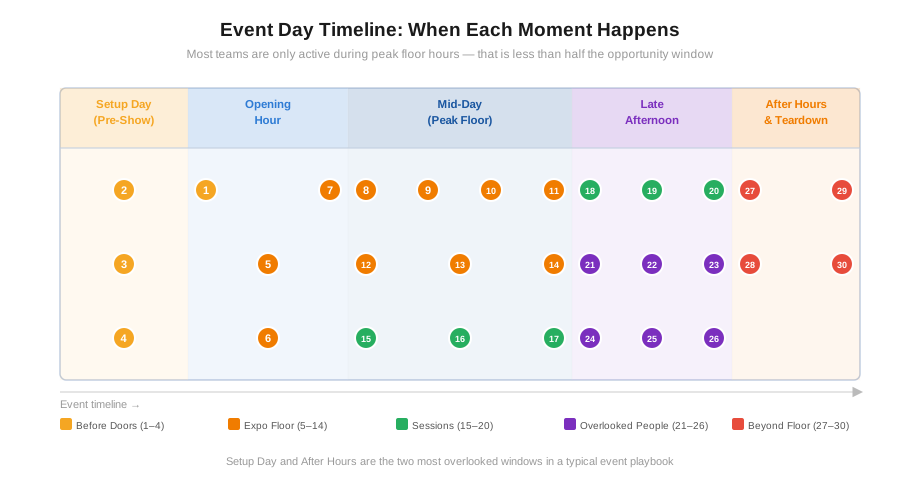
These are 30 of those moments. They happen at every event your team attends, and most of them go completely uncaptured — not because the intent wasn’t there, but because nobody was set up to notice it.
Before the doors open
These moments happen before most of your team is even fully set up. Easy to dismiss, but consistently worth paying attention to.
-
Badge pickup queue
People queuing to pick up their event badge have 15 to 30 minutes of time they didn’t plan for. They’re in a slow-moving line, nobody’s pitching them anything, and they’re already mentally switched into event mode.
Nobody’s competing for their attention in that queue. There’s no booth noise, no demo running, no agenda pulling them somewhere else. A rep who walks over and starts a genuine conversation here isn’t an interruption — they’re the most interesting thing happening in a slow-moving line. The conversations that start in this window are easy because the environment itself creates openness, and the person has nothing else to do while they wait.
Pro Tip: Position one rep near the badge queue during peak pickup hours on day one. Skip the pitch entirely. Ask what they’re hoping to get out of the event — that single question usually tells you everything you need to know about whether this is someone worth following up with.
-
Move-in day contacts
Setup day happens before the show opens, and it’s the quietest, most relaxed period of the entire event. The people around you — neighboring exhibitors, AV crews, logistics teams, event staff — are all building things alongside you.
These contacts are often more connected than they look. They talk to every booth at the event, they hear what’s getting traction, and they know buyers across the industry in ways that aren’t immediately obvious from a setup crew badge. The environment makes conversation natural because everyone’s in the same logistical situation, and that ease tends to produce more honest, more useful conversations than anything that happens on a busy show floor.
Pro Tip: Bring enough business cards specifically for setup day, and properly introduce your team to the exhibitors on either side of you. Your neighbors for the next three days know the same audience you’re targeting — and they might have two of your target accounts already on their schedule.
- VIP early-access floor walk
Most trade shows give a select group of attendees — sponsors, senior buyers, VIPs — private access to walk the expo floor before it officially opens to general admission. That window is almost always wasted because the exhibitor team is still arranging furniture and charging devices.
These are often the highest-value attendees at the event, and they’re walking through a quiet floor with no crowds, no queues, and no competing noise. Having at least one rep fully present and demo-ready for this window puts you ahead of every other booth that’s still running extension cords when those VIP badges come through. It’s a small planning detail that the majority of exhibitors never think to optimize for.
Pro Tip: Ask the event organizer in advance whether a VIP floor walk is scheduled. If it is, build your setup timeline backward from that window rather than forward from whenever your freight arrived. Being fully ready 30 minutes before general admission matters far more than perfecting the banner placement.
-
Shuttle and rideshare captives
The official event shuttle from the hotel to the venue is 10 to 20 minutes long, and it’s packed with attendees who are already thinking about the event but haven’t arrived yet — which means they have nothing specific on their agenda and nothing pulling their attention away.
Nobody’s running a pitch on a shuttle. The setting is relaxed, the context is shared, and people are genuinely open to conversation because they’re already in that headspace. A first-name introduction and a quick ‘what are you here for?’ on a shuttle ride often turns into a LinkedIn connection request before the day is out — which tends to be worth more than most badge scans that happen mid-afternoon on a crowded show floor.
Pro Tip: Use official event shuttles whenever they’re available, even if alternative transport is more convenient. Fifteen minutes in a shuttle with the right person can move a relationship forward faster than three follow-up emails after the show.
On the expo floor
The expo floor gets all the attention — but even here, most teams miss more than they catch.
-
The distance reader
At any busy trade show, some of the people most interested in your booth never actually walk into it. They stop 10 to 15 feet away, read your signage, and watch what’s happening inside without committing to stepping in.
These attendees have already done some filtering — they looked at everything around your booth and chose to stop at yours. They just haven’t crossed the invisible perimeter yet. A rep who walks out to meet them in the space between the booth and the aisle is making exactly the right move. It’s not an aggressive approach — it’s removing the gap between someone’s curiosity and an actual conversation, and most of the time the person on the other side genuinely appreciates it.
Pro Tip: Every 20 minutes, have one rep do a quick loop outside the booth perimeter and note who’s hovering nearby. People reading your signage from the aisle are often better prospects than the ones who walked in and are only half-paying attention to the demo.
-
Collateral browsers
When someone picks up your brochure or product sheet from the table without making eye contact, the instinct most reps have is to give them space and not push. That instinct costs leads.
A person picking up your materials is doing active research. They chose your brochure over everything else on the neighboring tables — that’s a signal, not idle browsing. A light opener like ‘anything on there catch your eye?’ is non-threatening and works far better than watching them walk away with the pamphlet. Understanding the full scope of trade show lead capture means recognizing that intent shows up in many forms beyond a badge scan, and this is one of the clearest.
Pro Tip: Train reps to consistently step toward collateral browsers instead of away from them. Treat it the same way you’d treat someone who just responded to a webinar invite — they’ve shown interest, the only remaining step is to start the conversation.
-
Booth photographers
People photographing your booth display, your demo screens, or your product signage are building a personal reference shortlist for later. They’re not randomly taking pictures — they’re creating a digital note to come back to when the show noise is gone.
The problem is that ‘later’ very often becomes ‘never.’ Camera rolls get reviewed for 30 seconds on the flight home and then buried under everything else. A person who photographed your booth wall has already decided you’re interesting enough to document. Getting even a 30-second conversation with them before they leave the area converts that digital note into an actual contact — which is infinitely more actionable than a JPEG sitting in someone’s photo library.
Pro Tip: Watch for phones going up near your display. A simple ‘want me to tell you what that is?’ is non-threatening and regularly turns a quick photo stop into a five-minute conversation with a follow-up call attached to it.
-
Watching-from-outside prospects
These are the attendees standing at the edge of your booth space, watching your demo or your pitch from outside without stepping in. They’re interested enough to stop and observe — they just haven’t decided it’s worth committing to yet.
Most reps don’t approach them because they haven’t physically crossed any visible line. But that line is exactly the problem — it’s the gap standing between someone’s active curiosity and an actual conversation. Walking out and acknowledging them directly — ‘come on in, I can show you this faster than it looks’ — is usually all it takes. The ones who were genuinely interested come in, and the ones who were just pausing will keep walking, which is also useful to know.
Pro Tip: During peak booth traffic, assign one rep specifically to the outer edge of the booth space. Their job is to engage the people hovering on the perimeter while everyone else manages the visitors already inside.
-
Mid-demo wanderers
When you’re two or three minutes into a live group demo, people drift in from the aisle and join the back of the crowd. They missed the intro, they haven’t been badge-scanned, and because they came in partway through, they tend to drift back out when the demo ends without anyone formally capturing them.
This is one of the cleanest gaps to close with a simple process change. Assigning one person specifically to catch late joiners — a quick scan while the demo runs, a note about what segment they walked in on — means that person gets properly followed up instead of becoming part of the vague ‘I think we talked to someone about that’ category in post-show notes. It takes one person with a clear task to close a gap that most teams completely overlook.
Pro Tip: Keep a small capture station at the entry point to your demo area — a tablet, a QR code, or a rep whose only job during live presentations is to greet and log late arrivals. One person with one clear task closes this gap entirely.
-
The second-pass visitor
If someone walks past your booth, disappears into the show, and then comes back — they’ve already looked at everything else and returned to you anyway. That return isn’t random wandering, it’s a decision being made in real time.
The mistake most reps make is treating a second visit the same as a first one and restarting the full pitch from scratch. That’s the wrong move. Someone returning has already compared you against the alternatives. The right response is to skip the overview and ask what brought them back — that answer tells you exactly where they are and what they still need. Teams that are serious about proactively capturing leads at events build this kind of floor awareness into their approach from the start.
Pro Tip: Brief reps to mentally note who comes by twice. A casual ‘didn’t I see you earlier?’ signals that you noticed, and that small acknowledgment makes the second conversation meaningfully more productive than the first.
-
Adjacent booth overflow
When a neighboring booth or a direct competitor runs a crowded demo, some of that crowd drifts sideways. They can’t get close enough to see clearly, so they move — and sometimes they end up near your space.
These people are warm and actively comparing options. They’re not wandering without a goal — they’ve already decided they’re in the market for something like what you offer. Being accessible and visible in that moment gives someone an easy reason to stop and look at what you’re doing. Most reps either miss this entirely or feel too uncomfortable about it to do anything with it, which means a genuinely high-intent audience keeps walking past untouched.
Pro Tip: If a nearby booth is pulling a crowd, make sure there’s something visually engaging happening at your space at the same time — a live demo, a screen showing real results, something interactive. Give anyone who drifts over a reason to stop rather than keep moving.
-
End-of-day floor dump
The last 30 minutes before the expo hall closes each day, senior buyers often wander with no agenda left. The sessions are done, their meetings are over, and they’re walking the floor with unplanned time.
This is one of the most valuable windows of the entire day, and most booth teams are already mentally switched off by then. Guards are down, schedules are empty, and people are more conversational than at any other point in the show — because the pressure of the day is genuinely gone. A rep who’s fully present and ready to talk in that final window has zero competition for it, which is a rarity at any point during the show.
Pro Tip: Stagger your team so that two people are running at full energy for the last 30 minutes of floor time, even if the rest of the team has been rotating breaks throughout the day. The quality of those late conversations routinely outpaces what happens mid-afternoon.
-
Lost attendees with floor maps
People standing near your booth studying a floor map or checking their event app are in a brief, unplanned pause. They’re not heading into a meeting, they’re not mid-conversation — they’re just figuring out where they need to be next.
This is a natural and easy opener for any rep who’s paying attention. ‘Can I help you find something?’ is genuinely useful, low-pressure, and human. If there’s any connection between where they’re heading and what you offer, the conversation transitions without anyone feeling sold to. And if there’s no overlap at all, you’ve still been helpful — which leaves a better impression than most brochures do.
Pro Tip: Know the floor layout well enough that you can actually help someone navigate. Being genuinely useful in that 60-second window builds more goodwill than a polished sales pitch does in five minutes.
-
The exhibitor neighbor
The team in the booth next to yours is at the event for all the same days you are, talking to the same general audience, and navigating the same logistics. Most exhibitors barely acknowledge each other beyond a passing nod.
That’s a real miss. Your exhibitor neighbors serve different parts of the same buying cycle, which makes them natural referral partners in both directions. They might have industry context that sharpens your pitch. They might personally know three of the target accounts you’ve been trying to reach. The relationship is easy to start because you’re literally side by side for three days, and the returns often outlast the event itself.
Pro Tip: Properly introduce your team to neighboring exhibitors on the morning of day one — not a quick wave, an actual introduction. Share what you do, ask what they do, and look for obvious referral opportunities. A warm introduction from a peer lands better than most cold outreach ever will.
In sessions and shared spaces
Sessions pull people away from the floor — but they also concentrate the most engaged and most curious attendees in one place.
-
Post-keynote corridor surge
Right after a general session ends, hundreds of people stream out of the same doors at the same time. They’re energized by what just happened on stage, they’re already talking about it, and nobody is stopping them in that corridor for a real conversation.
Teams that position reps in those corridors — not at the booth, but physically in the flow of people coming out — can start conversations that have real momentum behind them. A genuine ‘what did you make of that?’ is a better opener than anything you’d say at a booth, because the person is already thinking and already talking. That energy disappears within a few minutes of the crowd dispersing, making this a very specific window that most booth teams completely miss.
Pro Tip: Send at least one rep to attend major keynote sessions specifically so they can engage authentically on the content afterward. Someone who watched the keynote and has a real take on it is far more interesting to talk to in that corridor than someone who clearly didn’t.
-
Post-session Q&A lingerers
At the end of most sessions, a small group of attendees stays behind to ask the speaker follow-up questions. These are the most engaged people in that room — they have a specific problem they’re working through and they’re willing to make it visible.
A rep who attended the session can join that small group completely naturally, because they were there too. The conversation doesn’t start as a pitch — it starts as a shared reaction to something both people just heard. A ‘I had the same question’ or ‘that part was interesting to me too’ moves things forward without anyone feeling cold-approached. Conversations that start this way are consistently more substantive than anything that starts at a booth with a standard opener.
Pro Tip: Have reps attend sessions that directly address your buyer’s most common pain points, not just the sponsored ones. The follow-up conversations that come from a shared session experience are regularly more productive than anything that starts with ‘so, what brings you to the show?’
-
Live polling respondents
When a session runs a live poll, audience members vote and the results show up on screen in real time. Every person who participates is publicly flagging what they think about something directly relevant to their work.
That’s a live data point on where a room of buyers actually stands on a specific question — information most reps never get access to during a show. If you’re in a session and you can see how the audience voted on something your product addresses, you know immediately which problems are most present in that room. That turns the hallway conversation afterward from generic small talk into something specific — ‘I noticed the room was pretty split on that question, what’s your experience?’ gets much further, much faster.
Pro Tip: Make note of any poll result that maps directly to a pain point your product addresses. It gives reps something specific and observational to bring into follow-up conversations, which makes the outreach feel genuinely relevant rather than templated.
-
Workshop and certification session attendees
People who sign up for pre-conference workshops or hands-on certification sessions are making an active investment of time and attention. They showed up early, they’re skipping something else, and they’re going deep on a specific topic.
That level of commitment signals something specific. Workshop attendees tend to be practitioners and decision-influencers — the people who implement things, manage the teams, and often shape what eventually gets purchased. They’re almost never pitched by booth teams who spend the whole event on the expo floor. A rep who attends the same workshop as a genuine participant has a natural opening with everyone in that room without needing to engineer one.
Pro Tip: Map out the workshop and certification schedule before the show and identify which sessions align with your buyer profile. Attend them as a participant rather than as a vendor — let the shared context open the conversation naturally.
-
Association chapter side meetings
Embedded within most large trade shows are smaller, invite-style gatherings — association chapter breakfasts, industry luncheons, special interest roundtables — running alongside the main event with a completely different dynamic.
Vendors are almost never in those rooms, and the conversations there are more candid, more specific, and more relationship-driven than anything on the show floor. People talk about what’s actually working, what they’re about to go evaluate, and what they’re genuinely struggling with. Being present as a genuine participant — not as someone who got in to pitch — consistently produces stronger connections than a booth encounter would.
Pro Tip: Join the associations your buyers belong to before the show, not just at it. Membership gives you a legitimate reason to attend their side events and positions you as a peer in the room, not a vendor who found a way through the door.
-
The hallway track
The ‘hallway track’ is everything that happens outside scheduled sessions — the impromptu conversations at coffee stations, the clusters of people talking through something they just heard, the small groups that form when a few people realize they’re thinking about the same problem.
Some of the most consequential decisions made at any industry event happen in these unscheduled spaces. There’s no badge scanner and no booth to bring people back to — it requires being genuinely present across the whole event and engaging as a person, not just as a rep doing floor coverage. The teams that participate in events like human beings — not just during booth hours — build better relationships and generate better conversations downstream.
Pro Tip: Build meaningful buffer into the event schedule so reps aren’t sprinting from one booked meeting to the next with nothing in between. The best hallway conversations happen when someone actually has time to stop and have them.
The people everyone overlooks
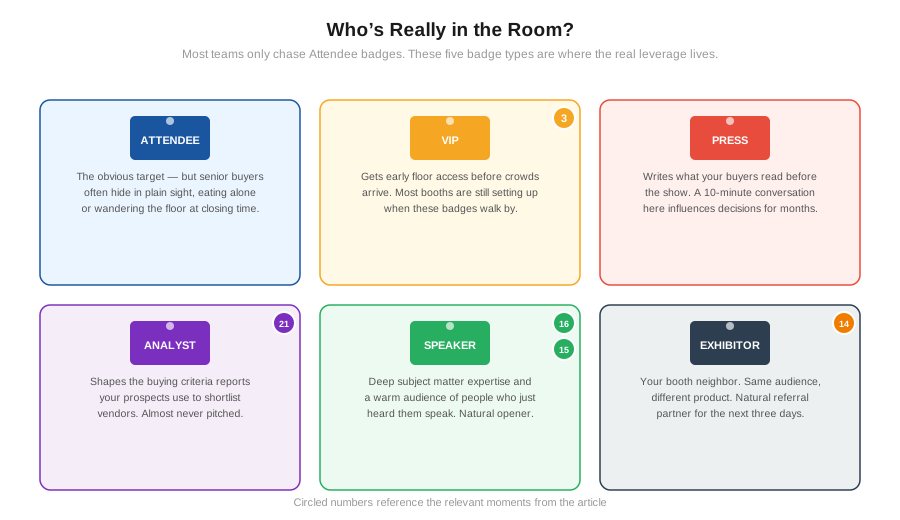
Not every valuable contact at a trade show is wearing an Attendee badge.
-
Press and analyst badge holders
The people walking around with Press or Analyst badges are some of the most informed and best-connected contacts in the building. Most booth teams scan for Attendee badge colors and completely ignore them.
Analysts write the reports that shape buying criteria months before a prospect ever gets to your booth. Press writes the articles your buyers are reading before they even arrive at the show. A 10-minute conversation with either at a trade show is worth more in long-term pipeline influence than most of the demos that happen during official booth hours. They’re not unreachable — they’re just being systematically overlooked by teams focused on the wrong badge color.
Pro Tip: Research which analysts and media are covering the event and reach out to schedule time before the show. The good ones are booked solid by day one — this is not a walk-up opportunity, it’s a pre-event task that most teams skip and then wonder why they’re absent from the post-show coverage.
-
Solo lunch sitters
Not everyone at a trade show wants to network loudly over a group meal. Some of the most senior and most qualified buyers eat alone because they genuinely need a break from the constant stimulation of an event.
These people are approachable in a way that a group table simply isn’t. There’s no social dynamic to navigate, no conversation already in progress to interrupt. A simple ‘mind if I sit?’ and a natural introduction is all it takes. Some of the best relationships that come out of events start over a solo lunch because there’s no performance happening on either side — just two people having an actual conversation at a normal pace.
Pro Tip: Eat lunch in the main dining areas of the event, not back at the booth or off-site with your team. The solo lunch conversation is only available to you if you’re actually in the room where it can happen.
-
Giveaway winners with no follow-through
Your team ran a raffle, collected names and contact details, gave away something worthwhile, and then put the list into the same post-show spreadsheet as every other lead from the event.
That’s a missed opportunity. Someone who entered your giveaway made a willing, deliberate act of engagement with your brand. They handed over their information by choice — they weren’t captured passively while walking past. The follow-up should reflect that specific context rather than ignore it entirely. A solid post-event follow-up strategy accounts for exactly where each lead came from and tailors the outreach accordingly — giveaway entrants are a distinct segment with a different opening, and treating them like any other badge scan loses the goodwill the interaction created.
Pro Tip: Tag giveaway participants separately in your system and give them a different follow-up sequence — one that references the interaction directly. ‘You came by our booth and entered to win X’ is a far stronger opening than ‘We noticed you attended [Event Name].’
-
Sponsor shoutout attendees
When your brand name gets mentioned from the main stage or over the PA system, heads turn. For a few seconds, the whole room registers that your company exists and connects it to something positive. Most exhibitors let that moment pass without doing anything with it.
It’s a small window but a real one. If your booth is visible from wherever that announcement happens, if there’s something actively going on at your space at that moment, the brief awareness spike can translate into actual foot traffic. It rarely happens on its own — you have to give people a reason to connect the announcement to something worth walking toward — but a team that plans for it is ahead of every team that treats the shoutout as just a naming moment.
Pro Tip: Time your booth’s most engaging activities — a live demo, a giveaway draw, an interactive element — to coincide with your scheduled sponsor announcement slots. Having something happening at your space at the exact moment your name is in the room’s ears consistently produces more traffic than the announcement alone.
-
The competing demo audience
When a competitor is running a live demo nearby, the people watching it haven’t made a decision yet. They’re actively comparing options, actively curious, and standing right there.
Being accessible and visible in that zone is uncomfortable for most reps, but it’s genuinely high-value if you approach it correctly. You’re not poaching anyone — you’re being reachable to people who are currently in the market for exactly what you offer and haven’t closed their options yet. A compelling visual, a live product moment, or just a rep who’s clearly engaged nearby gives someone an easy reason to come over and see what else is available before they decide.
Pro Tip: Make sure your booth’s most visually interesting element — a live data display, a product in action, something moving or interactive — faces toward areas where competitors run frequent demos. Give anyone comparing options something worth turning toward without requiring them to make a deliberate approach.
-
Canceled or no-show meeting contacts
Someone who booked a meeting with your team and then couldn’t make it already had real intent. They put time in their calendar, they made a commitment — something just got in the way.
This is a very different starting point from a cold lead. They know who you are, they made a deliberate decision to schedule time with you, and they probably feel somewhat guilty about the miss. A same-day message that’s casual and rescheduling-focused — not disappointed or formal — almost always gets a warmer response than cold outreach sent to any other segment from the same event. These contacts are consistently the fastest re-engagements of any show.
Pro Tip: Have a specific same-day protocol for no-shows. Something like ‘no worries at all, things always get hectic at shows — still around tomorrow for 15 minutes?’ works far better than waiting until the event is over to send a standard follow-up.
Beyond the show floor
The event doesn’t end when the badge-scan gates close for the day.
-
Charging station captives
Anyone plugged into a charging station has nowhere to be for the next 15 to 20 minutes. They’re not mid-conversation, they’re not heading into a meeting, and they’re generally happy to talk because they genuinely have nothing else to do while their device charges.
If there’s a charging area near your booth, it functions as a captive audience that refreshes throughout the day. A rep who treats that space as an informal conversation zone — relaxed, not transactional — will accumulate some of the easiest leads of the entire event without any formal approach required. The setting itself creates the conversation, which removes the most uncomfortable part of most cold introductions.
Pro Tip: If the venue allows it, consider sponsoring branded charging stations near your booth. You turn a basic amenity into a managed conversation opportunity and give people a practical, logistical reason to stand in your vicinity for an extended stretch of time.
-
After-hours unofficial gatherings
The dinners, rooftop events, and informal bar gatherings that happen after the show floor closes aren’t on the official event agenda — but they’re full of buyers, and the conversations are completely different from what happens during floor hours.
The professional posturing is off. People talk about what they actually think, what they’re genuinely evaluating, and what their real concerns are. Relationships that start in those settings tend to move faster because they’re built on something more genuine than a booth encounter and a badge scan. The rep who was at the right dinner will almost always get a warmer response on the follow-up call than the one who only showed up during official floor hours.
Pro Tip: Research which after-hours gatherings are most relevant to your buyer profile before the show — industry association dinners, media-hosted events, sponsor receptions. Being at the right one matters considerably more than trying to cover all of them.
-
Social media taggers
When an attendee posts about your booth, tags your brand, or shares a photo from your space mid-show, they’ve done your awareness work for you and publicly signaled genuine interest in what you offer.
Most teams don’t see these posts happening in real time, let alone respond to them while the show is still live. A quick comment, a direct message, or an invitation to come back for a deeper conversation turns a passive brand mention into an active relationship. Tracking these signals is part of what real-time event intelligence actually looks like in practice — knowing what’s happening around your brand at an event, not just what’s happening inside your booth.
Pro Tip: Assign someone on your team to monitor your brand mentions and the event hashtag throughout the show. A five-minute check every hour catches these moments while there’s still time on the floor to act on them.
-
Teardown day wanderers
The final hours of a trade show — when booths are being dismantled and logistics teams are moving freight — senior attendees often wander with completely empty schedules and nothing specific left to do.
The pressure of the event is gone. The agenda is over. People are relaxed and more reflective than they’ve been for the past three days, and they’ve had time to process everything they saw at the show. Most booth teams are too deep in packing logistics to notice any of this, which means the few reps who stay present and engaged in that window are operating with zero competition and an audience that’s actually ready to have a real conversation without an agenda pulling them elsewhere.
Pro Tip: Designate one person to maintain a business-ready presence for the first two hours of teardown while the rest of the team handles logistics. Even one hour of genuine availability in that window regularly produces connections that the busier days on the floor didn’t.
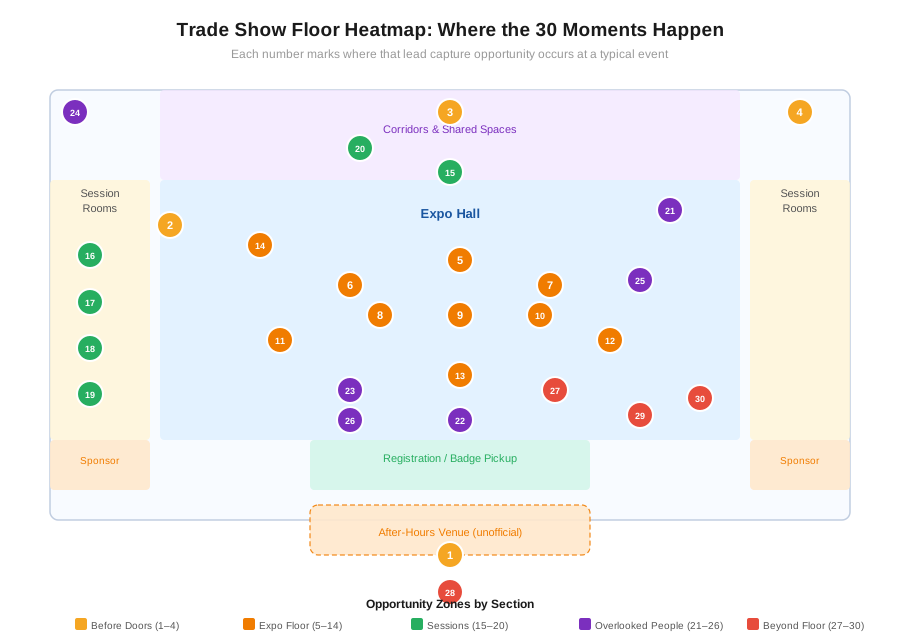
The common thread
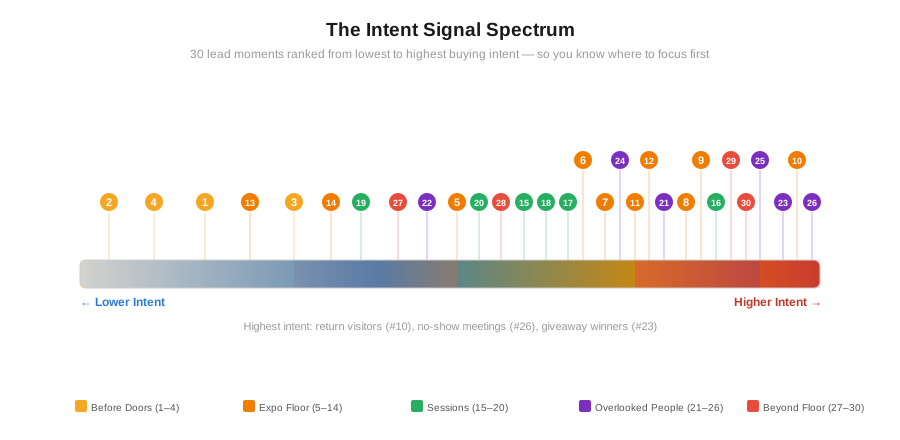
These 30 moments share one thing: they’re all expressions of interest that don’t look like a standard lead encounter. Nobody scanned a badge. Nobody walked up for a scheduled demo. But the intent was there — in the return visit, the photographed signage, the post-session question, the after-hours dinner conversation.
Most event teams are built to capture the obvious interactions and miss everything around them. The teams that consistently get more from their events aren’t necessarily working harder — they’re paying attention to a broader set of signals and have a system in place to act on them before those signals disappear. AI-powered lead capture is part of what makes that possible at scale — the ability to see more of what’s happening around your booth, score it in real time, and follow up while the conversation is still fresh.
The next time your team is at a show, count how many of these 30 moments are actually getting captured. That number will tell you something worth acting on.
See every lead your team is missing at events.