Trade fairs remain one of the most effective platforms for businesses to connect with prospects, but the challenge lies in turning a trade fair lead into actionable leads. Companies that adopt lead scoring systems see a 77% increase in ROI from their events. Despite this, many event professionals struggle to prioritize their leads effectively, often missing out on high-value opportunities.
In this article, we’ll delve into the significance of lead scoring at trade fairs, uncover the essential components of an effective system, and explore how tools like momencio can streamline the process. Whether you’re an event planner, marketer, or sales executive, mastering lead scoring is pivotal to transforming trade fair interactions into long-term business success. But, before we proceed, let us clearly understand how a trade fair is different to a conference.
What is a trade fair and how is it different than a conference?
A trade fair is a business-focused event where companies showcase products, interact with buyers, and generate leads through live demos and direct engagement. Unlike conferences, which emphasize knowledge-sharing and networking, trade fairs are transactional, attracting attendees in ‘buying mode.’ This makes them a prime opportunity for businesses looking for direct ROI.
Now with that out of the way, let’s understand why lead scoring is crucial for trade fairs.
Why is lead scoring important for trade fairs?
Trade fairs are bustling hubs of potential where businesses and prospects converge, but without a strategy to manage leads effectively, the opportunities they present can quickly become overwhelming. Enter lead scoring—a systematic approach to evaluating and prioritizing leads based on their potential value to your business.
What is lead scoring
Lead scoring assigns a numerical value or grade to each lead, reflecting their likelihood of becoming a customer. This evaluation is based on a variety of factors, such as:
- Engagement: How actively the lead interacts with your booth or materials.
- Demographics: Their alignment with your ideal customer profile.
- Behavioral cues: Specific actions like attending a demo or scanning a badge.
In trade fairs, where foot traffic can run into the thousands, a robust lead scoring system helps focus your resources on the most promising opportunities.
Why lead scoring matters
- Improves conversion rates: By identifying high-priority leads, your sales team can focus their efforts where they matter most.
- Optimizes resource allocation: Trade fairs are expensive; prioritizing quality over quantity ensures a better ROI.
- Enhances follow-up strategy: A well-scored lead database informs tailored, timely follow-ups, increasing the likelihood of conversion.
The role of lead scoring in trade fair success
At trade fairs, time is of the essence. You may only have a brief window to capture a lead’s interest before they move on. Only 37% of companies responded to their leads within an hour, emphasizing the need for a strategy that identifies and engages your hottest leads promptly.
Lead scoring ensures that:
- Sales teams can follow up with precision.
- Marketing teams can personalize outreach.
- Event ROI is measurable and demonstrably linked to sales outcomes.
What is a trade fair and how is it different than a conference?
A trade fair is a business-focused event where companies showcase products, interact with buyers, and generate leads through live demos and direct engagement. Unlike conferences, which emphasize knowledge-sharing and networking, trade fairs are transactional, attracting attendees in ‘buying mode.’ This makes them a prime opportunity for businesses looking for direct ROI.
How to generate trade fair leads
Trade fair leads aren’t about scanning badges and hoping for the best. They’re about identifying real buyers, filtering out time-wasters, and making sure your follow-up game is airtight. Here’s how to actually make it happen:
Most articles will tell you to “smile more” or “offer free swag,” but let’s dig deeper. The secret to generating trade fair leads isn’t just about being present—it’s about engineering curiosity.
Start weeks before the event by teasing a hyper-specific problem your product solves. For example, if you’re a CRM tool like Momencio, send personalized LinkedIn messages to attendees asking, “Struggling to follow up with 500+ leads post-event? We’ll show you how to automate 80% of it in 30 seconds.” This creates a “pull” effect, where prospects seek you out.
At your booth, ditch the traditional demo loop. Instead, use mini-challenges that require interaction. For instance, set up a 90-second “Lead Capture Olympics” where visitors compete to scan the most QR codes (using Momencio’s tools, of course). The winner gets a prize, but every participant leaves their contact details and engages with your product.
Leverage psychological reciprocity by offering value that’s unexpected. Instead of free pens, provide a “Trade Fair Survival Kit” (breath mints, phone charger, event map) in exchange for a quick lead scan. It’s practical, memorable, and low-cost.
Finally, use geo-targeted ads during the event. If someone spends more than 60 seconds at a competitor’s booth nearby, hit them with a cheeky ad: “Saw you at [Competitor]’s booth—want to see how we do X differently?” Tools like momencio can sync this data in real time.

6 little-known ways to attract quality leads at a trade fair
1. The “Unfinished Business” tactic: Use the Zeigarnik Effect—people remember incomplete tasks. Start a story or demo, then say, “I’ll finish this after you scan our QR code.” It creates subconscious urgency.
2. Scent marketing: Diffuse a subtle, branded scent (e.g., citrus for energy) at your booth. Studies show scent increases dwell time by 40%.
3. Booth “Shadows”: Place Momencio-powered iPads in high-traffic areas (coffee lines, restrooms) with prompts like, “Scan here to skip the demo queue.”
4. Faux competitions: Partner with non-competing booths to create a scavenger hunt. Participants collect QR codes from both booths, doubling reach.
5. Post-event pre-engagement: Send a pre-written calendar invite for a post-event call before the fair ends. “Reserve your 15-minute slot now—only 5 left!”
6. The “Anti-Booth”: Ditch the table. Create a lounge area with charging stations and host 5-minute “speed networking” sessions. People relax, stay longer, and share details freely.
Realistically, how many leads can you get at a trade fair?
A “good” number isn’t universal. It depends on:
- Booth location: A prime spot can double leads.
- Pre-event buzz: Did you tease a product launch? Expect 20-30% more engagement.
- Staffing: More reps = more conversations. Rule of thumb: 1 staffer per 50 attendees/hour.
Use the Lead potential formula: (Total Attendees × Industry Capture Rate*) × Engagement Boost** = Estimated Leads
*Capture Rate: 2-5% for niche industries, 0.5-1% for broad.
**Boost: Pre-event marketing (20%), interactive tech (30%), staff training (15%).
Example: A 10,000-attendee tech fair with a 3% capture rate and 65% boost:
(10,000 × 0.03) × 1.65 = 495 leads.
But prioritize quality. If momencio’s lead scoring mechanism shows 50% of leads are “hot,” that’s 248 sales conversations—far better than 1,000 unqualified contacts.
In the following sections, we’ll explore the components of an effective lead scoring system and how tools like momencio can simplify the process, ensuring your trade fair leads are not just plentiful but also impactful.
How to measure the success of trade fair leads
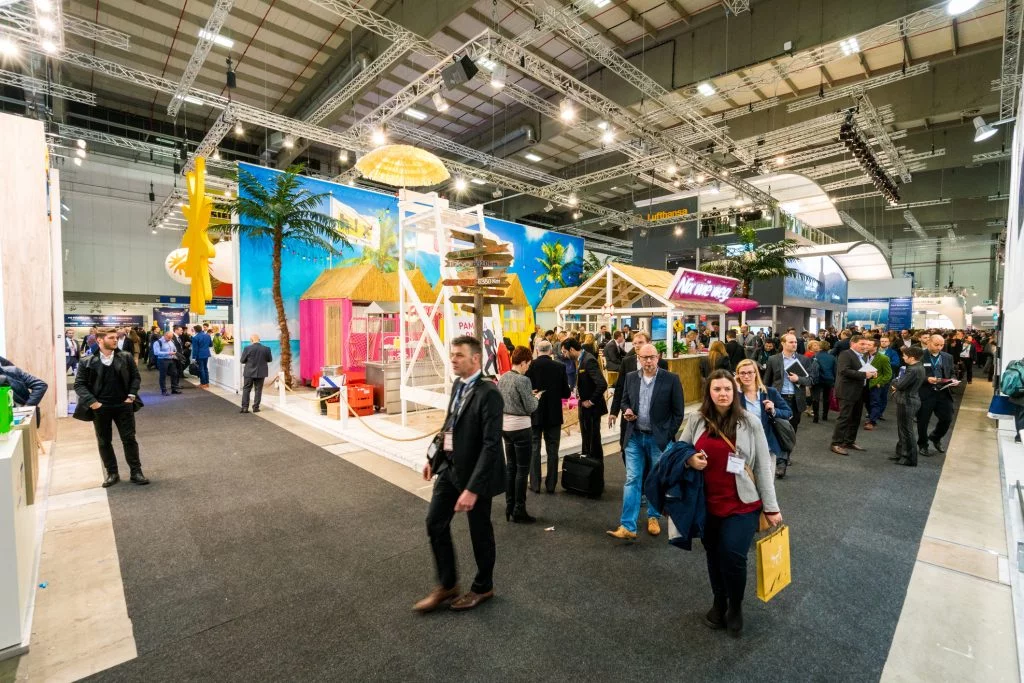
To harness the full potential of trade fairs, your lead scoring system must be both comprehensive and adaptable. A well-designed system not only identifies the hottest leads but also provides actionable insights to guide your follow-up strategy. Let’s break down the key components of an effective lead scoring system.
1. Engagement level
Engagement is a primary indicator of a lead’s interest in your products or services. Key engagement signals at trade fairs include:
- Booth visits: How long a lead spends at your booth and the activities they engage in.
- Content interaction: Whether they request demos, download materials, or participate in activities like quizzes or surveys.
- Communication frequency: The number and type of questions they ask your team.
2. Lead qualification criteria
Not all trade fair leads are created equal. A good lead scoring system aligns with your Ideal Customer Profile (ICP) by evaluating:
- Demographics: Does the lead match your target market in terms of industry, job role, or company size?
- Budget and decision-making power: Are they in a position to make purchasing decisions?
- Purchase intent: Have they expressed immediate or future interest in your offerings?
3. Behavioral cues
Behavioral cues offer insights into a lead’s readiness to move down the sales funnel. Consider assigning higher scores to leads that:
- Request pricing information: Indicates serious intent.
- Engage in product demonstrations: Shows interest in understanding your value proposition.
- Interact multiple times: Suggests they are exploring your brand more deeply.
4. Scoring weightage and customization
Each lead scoring system should be tailored to your business needs. Assign weights to criteria based on their importance. For example:
- Booth visits might carry a 20% weight.
- Engaging in a product demo might account for 30%.
- Matching ICP demographics could be 50%.
Customizable scoring ensures the system reflects what matters most to your sales strategy.
5. Real-time scoring updates
In dynamic environments like trade fairs, real-time scoring is critical. As leads interact with your booth or respond to follow-ups, your scoring system should update instantly, ensuring your team always works with the most accurate data.
6. Automation and integration
Manual scoring systems are not only time-consuming but prone to human error. Automation tools, such as momencio, streamline the process by:
- Automatically updating scores based on lead interactions.
- Synchronizing with CRM systems for seamless follow-ups.
The role of real-time data in enhancing lead prioritization
Trade fairs are fast-paced environments where opportunities can be fleeting. Real-time data transforms the lead management process by providing immediate insights into attendee behavior, enabling you to prioritize high-value leads before they slip away.
Why real-time data matters
Real-time data ensures that your team has access to the most up-to-date information about lead activity. According to a study by HubSpot, sales teams that act on real-time insights are 53% more likely to close a deal compared to those relying on static data.
In a trade fair setting, this translates to:
- Identifying high-priority leads instantly: If a prospect attends a demo, requests a brochure, and engages with your team multiple times, they should be flagged for immediate follow-up.
- Tailoring interactions: Knowing what a lead has already seen or asked about allows your team to personalize conversations, improving the likelihood of conversion.
Key data points to track in real-time
- Booth traffic metrics
- How many times a lead visits your booth.
- The duration of their stay.
- Activities they participate in, such as demos or surveys.
- Engagement with digital content
- Downloads of brochures or whitepapers.
- Interactions with interactive screens or kiosks.
- Responses to gamified elements like quizzes or competitions.
- Behavioral cues
- Frequency of questions asked.
- Interest in pricing or specific products.
- Willingness to share contact details for follow-up.
The role of technology in real-time data
Advanced tools like momencio play a pivotal role in capturing and analyzing real-time data. For example:
- Badge scanning and tracking: Instantly capture a lead’s information as they interact with your booth.
- Integrated dashboards: Visualize lead activity in real-time, enabling your team to prioritize hot leads while the event is still ongoing.
- Automated alerts: Notify your sales team when a lead crosses a predefined scoring threshold, prompting immediate action.
Examples of real-time scoring in action
Imagine an attendee stops at your booth, scans their badge, and watches a product demo. Moments later, they ask a few follow-up questions and provide their business card. With real-time scoring, this lead is immediately flagged as high priority, and your team is alerted to engage further.
Benefits of real-time data for trade fair success
- Improved lead conversion rates: Acting on real-time insights significantly increases the likelihood of converting high-priority leads.
- Optimized team performance: Your team can focus their efforts on leads that are most likely to convert, maximizing productivity.
- Enhanced attendee experience: Personalized interactions based on real-time data create a more engaging and memorable experience for prospects.
In the next section, we’ll explore how integrating CRM systems with lead scoring tools bridges the gap between trade fairs and long-term sales success.
Integrating CRM and scoring systems
Lead scoring is only as effective as the system that supports it. Integrating your lead scoring tool with a robust Customer Relationship Management (CRM) system bridges the gap between capturing leads at trade fairs and nurturing them into paying customers.
Why CRM integration is essential
Trade fairs generate a wealth of lead data that must be accessible to both marketing and sales teams. A CRM integration ensures:
- Centralized data management: All lead interactions, scores, and updates are stored in one location, eliminating information silos.
- Streamlined follow-ups: Leads automatically move into the sales pipeline, enabling teams to initiate timely, personalized communication.
- Enhanced collaboration: Both marketing and sales teams can access the same data, fostering alignment and ensuring no lead is neglected.
How CRM integration works with lead scoring
When your lead scoring system integrates seamlessly with your CRM, the process looks like this:
- Data capture: Tools like momencio collect real-time lead data through badge scans, digital interactions, and booth activities.
- Automatic scoring: Leads are scored based on predefined criteria, such as engagement level, demographics, and behavioral cues.
- Syncing with CRM: The scored leads are immediately pushed to your CRM, complete with detailed profiles and engagement histories.
- Sales readiness signals: High-priority leads are flagged in the CRM, allowing sales teams to prioritize their efforts effectively.
Key features of an integrated system
- Automated data sync: Reduces manual data entry and ensures accuracy.
- Activity logs: Tracks every interaction a lead has with your brand during the trade fair.
- Lead segmentation: Groups leads by score, stage in the buyer’s journey, or engagement type for targeted follow-ups.
- Follow-up templates: Provides prebuilt email sequences tailored to each lead’s interest level and engagement history.
Benefits of CRM and lead scoring integration
- Faster response times
- Leads captured at trade fairs often go cold quickly. An integrated system ensures your team can follow up within hours, significantly increasing conversion potential.
- More accurate lead qualification
- The scoring system evaluates the quality of each lead, ensuring sales teams focus on those with the highest potential.
- Personalized communication
- With detailed lead profiles, follow-ups can be tailored to address specific needs or pain points.
- Data-driven insights
- CRM reports provide insights into lead behavior, helping refine future event strategies.
Example in action
At a recent trade fair, a software company integrated momencio with their CRM. Leads who scanned their badges were scored in real-time based on their interactions, such as attending a product demo or downloading a brochure. Within minutes, high-priority leads were synced with the CRM and assigned to sales reps. This integration resulted in a 35% higher follow-up rate, significantly boosting conversions.
In the next section, we’ll delve into how momencio specifically enhances trade fair lead scoring, offering a streamlined solution for event professionals.
How momencio helps you spot high-value trade fair buyers early
Trade fairs generate hundreds of interactions, but only a fraction of those conversations represent real commercial potential. The challenge isn’t capturing more leads; it’s developing the situational awareness to understand which leads are exhibiting early buying signals, how their intent changes over the course of the event, and when your team should act.
A contemporary lead-intelligence stack solves this by layering structure, context, and behavioral data onto every interaction. Below are the capabilities that actually move the needle for exhibitors—and why they matter.
1. Start with complete, reliable data so scoring doesn’t collapse later
Weak lead scoring almost always starts with weak inputs: incomplete badge scans, missing job roles, inconsistent notes, or ambiguous conversation summaries. When the raw data is unreliable, every scoring model built on top of it becomes guesswork.
AI Edgecapture solve this by converting every lead captured—badge scan, business card, quick conversation—into a clean, enriched profile. Instead of your reps scrambling to remember details, your scoring system begins with:
-
accurate contact data
-
validated company and role information
-
alignment with your ICP
-
contextual notes captured automatically in real time
This establishes a stable foundation so the eventual “hot lead” signal is actually trustworthy.
2. Detect buying intent from conversations, not just activities
A trade fair attendee asking about pricing, timelines, integrations, or existing pain points is signaling priority. Another attendee who simply collects brochures may not be a real opportunity even if they spend longer at your booth.
This is where engagement intelligence becomes critical. Not to promote any tool, but systems like momencio’s smart notes are designed to capture what your reps cannot in the moment:
-
urgency cues
-
dissatisfaction with current vendors
-
active projects
-
budget indicators
-
explicit problem statements
This matters because intent expressed verbally often predicts purchase readiness more accurately than any booth metric. High-value leads often reveal themselves through what they say, not what they do.
3. Monitor digital behavior to understand who stays engaged after the booth interaction
Your hottest trade fair lead rarely stops thinking about you once they leave your booth. They revisit content, open links, forward materials internally, or spend time comparing solutions that address their immediate problem.
This is why digital body language—content views, return visits, document engagement—is now a frontline indicator of deal potential.
A personalized microsite or digital handoff page acts as a “second booth” where the real scoring happens. When a lead:
-
watches a full demo
-
returns at night to view pricing
-
shares collateral with colleagues
-
spends more time on solution pages than company pages
They are telling you something their badge scan never will: “I’m evaluating you seriously.”
This is often the clearest early predictor of pipeline conversion.
4. Use real-time prioritization so your team doesn’t chase leads blindly
At most trade fairs, exhibitors discover their hottest leads after the event—when it’s too late to influence them. momencio’s IntelliStream A real-time scoring and alerting system flips this dynamic.
When intent signals accumulate—high-value profile, strong conversation, repeated digital activity, interest in pricing—your team sees changes as they happen. This lets you:
-
re-engage promising leads before they leave the venue
-
schedule follow-up meetings while interest is fresh
-
allocate senior reps to the highest-value conversations
-
avoid wasting time on low-intent badge scans
This is the difference between “collecting leads” and competing strategically during the event itself.
5. Connect event intelligence directly into your sales workflow
A lead only becomes valuable when your sales team can act on it. The final step is ensuring that prioritized leads—along with their behavioral context—flow directly into CRM with no manual transcription.
When sales receives a lead enriched with:
-
who they are
-
what they care about
-
what content they consumed
-
how many times they returned
-
what they said during the conversation
…they are not following up cold. They are following up in context, which dramatically increases both response rates and conversion probability.
This integration is where exhibitors see the highest ROI uplift because the entire chain from capture → scoring → sales action becomes seamless.
The outcome: clarity on who your real buyers are
When these capabilities work together, exhibitors aren’t guessing. They can clearly distinguish between:
high-volume but low-intent booth traffic and a small set of high-value leads demonstrating real buying momentum.
This is how you identify the hottest trade fair lead—not through intuition, not through a rushed conversation recap, but through structured, observable signals across physical interactions, verbal intent, and digital behavior.
Conclusion
Trade fairs don’t reward the busiest booths. They reward the teams who know which conversations matter. Lead scoring is what gives you that clarity. It cuts through the noise, elevates real buyers, and ensures your follow-ups aren’t driven by guesswork or gut feel.
When you can see intent across conversations, behaviors, and post-event engagement, your team stops chasing volume and starts prioritizing momentum. That shift is what turns a stack of badges into a real pipeline.
In the end, the value of a trade fair isn’t how many leads you collect. It’s how quickly you can identify the ones that are ready to move. Lead scoring is the system that makes that possible.
FAQs
- What is lead scoring, and why is it important for trade fairs?
- Lead scoring is the process of assigning a value to leads based on their likelihood to convert. It’s crucial for trade fairs because it helps prioritize high-value prospects, ensuring efficient follow-ups and maximizing ROI.
- How does real-time data improve lead scoring at trade fairs?
- Real-time data provides up-to-the-minute insights into attendee behavior, allowing your team to act on high-priority leads immediately. This ensures that no hot lead goes cold while the event is still ongoing.
- Can lead scoring systems integrate with CRM platforms?
- Yes, tools like momencio integrate seamlessly with popular CRM platforms, ensuring all lead data is centralized, up-to-date, and ready for sales follow-ups.
- How do I customize a lead scoring system for my business?
- Define criteria based on your business goals, such as engagement levels, demographics, and purchase intent. Assign weights to these criteria to reflect their importance, and use a platform like momencio to automate scoring.
- How soon should I follow up with trade fair leads?
- Follow up within 24-48 hours for the best results. Automated tools can help streamline this process, ensuring timely and personalized communication.
Interesting facts from research
- Companies that implement lead scoring experience a 77% improvement in ROI from their lead generation efforts.
- Real-time lead prioritization increases conversion rates by 50% when followed up promptly.
- Over 61% of marketers find lead quality to be a bigger challenge than lead quantity, highlighting the importance of effective scoring.