Exhibitor direct spend at U.S. trade shows now sits at roughly $30 billion a year. About 40% of that goes to floor space alone, before a single conversation happens. That number tells you how much B2B teams still believe in conferences and workshops, and how easily that belief can become an expense without a return.
So what is the most valuable benefit of attending conferences and workshops, beyond learning something new? It is access. Access to people, conversations, problems, trends, and opportunities that are hard to reach through digital channels alone.
That access only translates into business outcomes when there is a system to capture it, act on it, and measure what came of it. Most teams have the access. Very few have the system. Here are the biggest benefits worth attending for, and the one thing that decides whether the investment pays off.
1. You hear the market in its own words
Conferences are one of the best places to understand what a market actually cares about. Buyers describe their problems out loud, raise objections without a filter, compare solutions in real time, and use language that no survey or intent-data tool will ever surface. That language is gold for sales scripts, marketing copy, product positioning, and leadership decisions about where the company should be heading next.
A team that walks the floor with the deliberate intention to listen, not just exhibit, will come back with a sharper read on the market than any analyst report can offer. The conversations at the coffee station, the questions raised in panel Q&A sessions, and the side comments after a keynote all add up to something that does not show up in a dashboard.
2. You build relationships faster
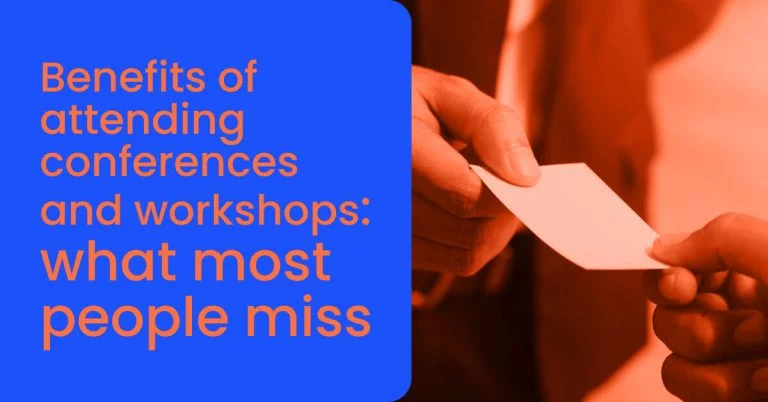
A short, in-person conversation can do what dozens of cold emails cannot. Trust forms faster face to face, and a five-minute exchange at a booth or after a session often turns into a longer relationship that would have taken months to build over LinkedIn.
Conferences put prospects, customers, partners, analysts, vendors, investors, and future hires in the same building. Some of the strongest business relationships in B2B start with a thirty-second conversation in a coffee line, and many of those relationships shape pipeline a year or two later in ways that are hard to predict in the moment.
3. You discover real buying intent
People who attend conferences are often actively looking for ideas, vendors, benchmarks, or solutions. CEIR research shows that 72% of attendees are more likely to buy from exhibitors they meet at trade shows, and a meaningful share of any audience is in the early stages of a real purchase decision.
That does not mean everyone is ready to sign. It does mean a careful conversation can tell you who is curious, who is researching, who has urgency, and who is a strong fit for what you sell. Reading those signals well is the difference between a busy booth and a productive one.
4. You learn from peers
Workshops are especially useful because they show how peer teams are solving similar problems. The format is intimate enough to surface what is actually working, what is not, which tools are being used, and which mistakes to avoid. A single afternoon workshop can save a team six months of trial and error.
Peer learning at events also has a quality that internal training and case studies cannot match. The lessons come from people who are still in the middle of solving the problem, not from a tidied-up version polished for a stage. That rawness is what makes the takeaways usable.
5. You create content and thought leadership
A conference gives a marketing team a remarkable amount of raw material. Industry trends, customer questions, panel insights, common objections, competitive positioning, new use cases, and personal takeaways all accumulate over a few days. One well-attended conference can fuel a quarter of LinkedIn posts, blog articles, sales enablement notes, and webinar topics.
Most marketing teams capture a fraction of what is available because nobody plans the capture in advance. The teams that do plan it walk in with a content brief, assign someone to take notes during sessions, and run short interviews with attendees and customers on the floor. That single decision changes how much value the company gets out of the event for months afterward.
6. You strengthen your brand
Showing up consistently at the right industry events builds familiarity with the people who matter. Buyers and partners may not become customers immediately, but they begin to recognize the company, the team, and the point of view.
In B2B, where deals take months and decisions are made by committees, that familiarity matters more than most marketing teams give it credit for. A buyer who has seen the company at three events over a year is far more likely to take a meeting than one who has only ever received a cold email.
7. You reconnect with customers
Conferences are not only for new leads. They are some of the best environments to meet existing customers face to face, hear honest feedback, surface expansion opportunities, and understand how the product is really being used in the field.
Account managers who plan customer meetings into their event schedule almost always come back with stronger renewal momentum and a clearer view of which accounts are growing. The customer conversations at events are usually more candid than the ones on a quarterly call, simply because the setting is different.
8. You spot trends earlier
Industry events are often where new ideas appear before they become mainstream. New frameworks, new vendors, new use cases, and new problems show up on stage and on the show floor months before they hit the broader market.
That early signal is useful for sales, product, and leadership. It tells you which topics are gaining attention, which problems are becoming urgent, and where budgets may be moving. Teams that listen for these signals build a planning advantage that compounds over a few cycles of events.
9. You create partnership opportunities
Some of the most valuable event conversations are not direct sales conversations. They happen with integration partners, agencies, consultants, distributors, media contacts, associations, and complementary vendors who can open doors that a direct outbound motion never could.
These relationships rarely show up in the quarter they start. They tend to surface a year later, when a partner sends an introduction, a consultant recommends the company in a procurement process, or a media contact runs a story that brings in inbound interest. Treating partnership conversations as a serious part of the event plan, not as an accident, is what separates teams that build a referral engine from teams that do not.
10. You generate pipeline (with the caveat that matters)
Yes, conferences can generate leads and pipeline. But only with a process. A common mistake is attending or exhibiting, having great conversations, collecting a few business cards or badge scans, and then losing momentum afterward. By the time follow-up begins, the buyer has moved on, the context is gone, and the conversation that felt promising on the floor is now just another lead in the CRM with no story attached to it.
CEIR data shows that 67% of conference attendees are completely new prospects for the exhibitors they meet. That number is only useful if those prospects make it into a real pipeline conversation afterward. Without that, the access an event provides becomes an expense without a return.
The real value comes from what happens after the interaction. The teams that consistently get pipeline out of events do six things differently.
- They capture the right context at the moment of conversation, not three days later from memory. The problem the person described, the timeline they hinted at, and the next step that was discussed all get noted while the detail is still sharp.
- They follow up quickly, while the conversation is still fresh in the prospect’s mind. A relevant message within forty-eight hours converts at a far higher rate than a generic email a week later.
- They follow up with relevance. The follow-up references the actual conversation, sends content that fits the problem the prospect described, and avoids the generic post-event template that every other exhibitor sends.
- They route the lead to the right person internally. Sales knows who the prospect is, what stage of interest they showed, and what the right next step is. Nothing falls through the cracks because nobody is sure who owns it.
- They get the interaction into the CRM with full context, not just a name and a title. The note that was taken at the booth becomes the briefing document for the next call.
- They measure whether the event influenced pipeline, not just whether leads were collected. That measurement is what justifies the next budget cycle and improves the next event plan.
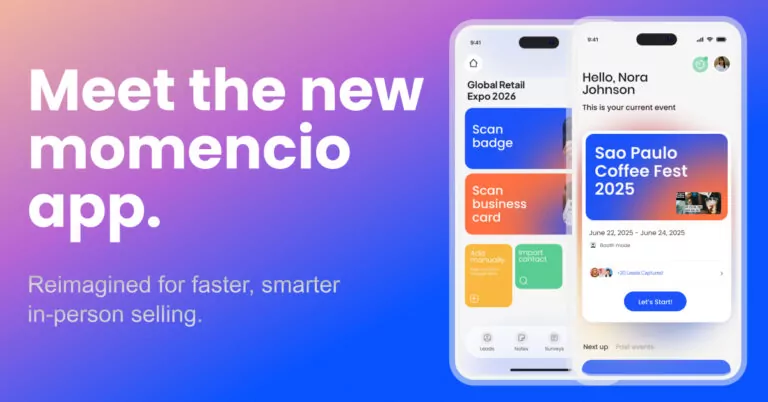
This is the work that separates the events that pay off from the ones that do not. At momencio, we think about this constantly because we built the platform around it. The value of a conference is not only in the people you meet. It is in the ability to turn those conversations into lasting relationships and measurable business outcomes through structured lead capture and intelligent post-event follow-up.
momencio won the
The takeaway
Conferences and workshops still offer something that no digital channel can replicate. Direct access to people who are actively in market, peers who are solving similar problems, and trends that have not yet become widely visible. The list of benefits is long, and most of it is real.
None of it converts into business outcomes without the work that happens after the event ends. Capture the conversation properly. Understand what the person actually wants. Follow up while the moment is still warm. Measure what came of it. That is the real difference between a team that attends events and a team that gets pipeline out of them.
The best conference strategy is not to attend more events. It is to make every event interaction count.