Most event teams spend the final week before a trade show arranging logistics. Booth setup. Collateral counts. Staff schedules. Shipping confirmations. All of it necessary. None of it is pre-event intelligence.
The teams that consistently outperform them are doing something else entirely in that same window. They are building a picture of who will be in that room, what those people care about, what they have already been sent, and what they are ready to hear. They are turning a logistics exercise into an intelligence operation.
That shift, from preparation as administration to preparation as strategy, is what event intelligence looks like before the doors open. And it may be the highest-leverage thing your team is not doing.
Preparation is not a task. It is a philosophy.
There is a difference between getting ready and being ready. Getting ready is a checklist. Being ready is a state of mind built on specific knowledge about what you are walking into.
The best sales professionals in the world have always known this. They do not walk into a call hoping a good conversation happens. They have studied the account. They know the buying committee. They know what the prospect said last time, what kept them from moving forward, and what question, asked the right way, will open the door.
Event teams rarely apply that same discipline to the show floor. The reason is not laziness. It is a structural habit. Events feel like volume activities. Hundreds of conversations over two or three days. The temptation is to optimize for throughput, not depth. But your trade show management results will not improve through volume alone. The conversations worth having require specific preparation, and that preparation has to start weeks before the event begins.
You cannot manufacture insight on the show floor. You can only spend it. The account that walks up to your booth having already engaged with your content, having already signaled buying intent, having already been briefed on your solution: that account was prepared for weeks before the event started.
Know who you are looking for before the doors open
Not every attendee at a trade show represents an equal opportunity. Some are researchers. Some are students of the industry. Some are competitors. A small number are buyers at the right stage, in the right company, with the right problem. Your job, weeks before the show, is to find those people by name.
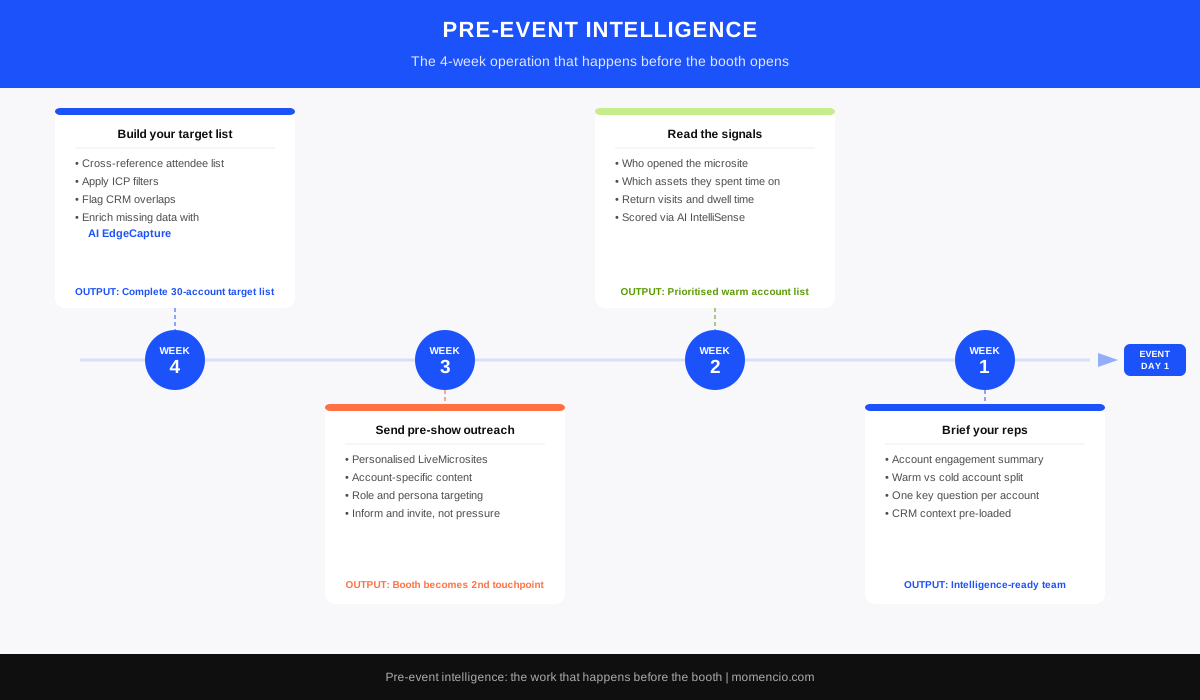
Start with the attendee list. Most shows publish a registered attendee list or exhibitor directory in the weeks leading up to the event. Cross-reference that list against your ICP criteria. Company size, industry, revenue band, technology stack, and geography. Whatever signals, in your experience, correlate with closed deals. The accounts that match belong on a target list. Everyone else is background.
The attendee list is not a lead list
This distinction matters more than it sounds. An attendee list tells you who registered. A lead list tells you who is worth a deliberate conversation. The gap between those two things is your ICP filter, applied with discipline before the show opens.
Aim for specificity over volume. A target list of thirty accounts where you know the decision-maker’s name, the buying stage, and the problem they are trying to solve is worth more than a hundred badge scans collected without context. Your reps should walk onto that floor knowing exactly who they are looking for, not hoping the right people walk by.
Enrich what the attendee list does not tell you
Attendee lists are rarely complete. Names without job titles. Companies without industries. Partial records that tell you someone registered but nothing about whether they fit your ICP. This is where AI EdgeCapture closes the gap. It enriches incomplete attendee data automatically, filling in missing firmographic and contact details so your target list is built on full records, not half-furnished ones. The accounts you decide to prioritize should be based on complete information, not on whatever the event organiser happened to collect at registration.
This is also the moment to check your CRM for prior contact. Which of your target accounts have engaged with momencio before? Which ones requested a demo and went cold? Which ones are in an active opportunity that the event could accelerate? That context belongs in the briefing your reps carry to the show. And when conversations do happen at the event, QR badge scanning becomes the starting point for capture, not a substitute for the intelligence work that happened before it.
Get there before you arrive
The window between when a prospect decides to attend a show and when the show opens is the most underused real estate in event marketing. Your competitors will meet that prospect at the booth. You can meet them three weeks earlier.
Pre-show content seeding is the practice of getting your content in front of target accounts before the event begins. Not a generic email blast to your registered attendee list. personalized outreach, built around what you know about each account, using LiveMicrosites sent ahead of the show that surface the content most relevant to that buyer’s role, industry, and known interests.
The goal is not to close the deal before the show. The goal is to make your booth conversation the second touchpoint, not the cold open. A prospect who has already received a personalized microsite, read your relevant case study, and seen your differentiation framed in terms of their specific problem is a fundamentally different conversation than someone who has never heard of you.
What the outreach should do, and what it should not
Pre-event outreach should inform and invite, not pressure. The prospect is not yet in a sales conversation. They are in a research phase. Your outreach earns attention by being useful. A personalized note that says you will be at the show and that you have put together something relevant to a challenge their industry is facing will get more traction than a meeting request with a calendar link.
Reserve the ask for the event itself. The outreach plants the flag. The booth conversation converts it.
Read the signals your outreach generates
Once your personalized outreach is live, the intelligence work begins. Every prospect who opens your pre-event email, visits the microsite you sent, spends time on a specific asset, or returns to look at your pricing page is telling you something. Not in words. In behavior.
This is where AI IntelliSense earns its place in your pre-event workflow. It reads the engagement signals generated by your own outreach: which accounts opened the microsite, which assets they spent time on, how many times they returned, what they looked at most closely. That pattern of behavior, assembled before you arrive at the show, tells you which accounts are warming up and which ones need a different approach.
What signal patterns tell you before the show
An account that received your personalized microsite, visited it twice, spent four minutes on your case study, and opened your follow-up email is in a different state than an account that has not engaged at all. The first conversation requires a rep who walks in knowing that context and is ready to advance the relationship. The second requires a different opener entirely. This is the same behavioral logic that underpins the signals of shifting buyer psychology research: buyers signal movement through action before they declare it through words.
The job of pre-event intelligence is not to manufacture warmth. It is to find it where it already exists and make sure the right rep walks into that conversation knowing what they are stepping into.
Brief your team the way a coach briefs a team before a championship
No coach sends their team onto the field with a product brochure and a smile. They prepare them. They study the opponent. They build a game plan specific to what they are walking into. They know which plays to run and which ones to hold back. They do this because the difference between a prepared team and an unprepared one is not talent. It is knowledge applied at the right moment.
Your pre-event rep briefing should operate at that level. Not a thirty-minute product refresher the morning of day one. A structured brief, built on account intelligence, distributed before the team travels, that tells each rep exactly what they need to know about the accounts they are most likely to encounter.
What belongs in an intelligence-grade rep brief
For each target account on your list, the brief should include the company profile against your ICP, any prior contact history from your CRM, what content they received and how they engaged with it, which buying signals they have shown through that engagement, the likely decision-maker at the event, the problem you expect them to be solving for, and the one question your rep should try to answer in the conversation.
That last point deserves emphasis. The one question. Not a qualification script. Not a list of discovery questions. One question that, if answered, tells the rep whether this account is ready to move and what the next step should be. That clarity is what separates a productive booth conversation from a pleasant one. Feeding that intelligence into event dashboards before the show opens means your team can see account context in real time, not in a debrief two days later.
For teams who want a structured framework for this entire preparation phase, the set the stage for pipeline guide walks through how to align the pre-event window with a pipeline-first mindset, from account selection through rep enablement.
What this changes when the show opens
Pre-event intelligence does not make the booth conversation easier. It makes it different. Instead of starting from scratch with every person who walks up, your reps are continuing a conversation that has already begun. They know the context. They know what matters to this account. They know what question to ask and what answer they are listening for.
The downstream effects are measurable. Qualification rates improve because reps are not spending time discovering basics that could have been known in advance. Pipeline quality improves because the leads captured at the event arrive in the CRM with context already attached, not as a list of names that sales has to research from scratch. Follow-up speed improves because the handoff is clear. And because the entire capture architecture was built before the event started, using universal lead capture, every conversation is recorded against a structured lead record from the first interaction.
This is what the five layers of event intelligence framework describes as moving beyond layer one. Most teams stop at identity capture. The teams that build pre-event intelligence are already operating at layer three or four before the show begins, because the behavioral and contextual data was assembled in advance.
And it connects directly to what the event intelligence vs. event data distinction is built on: data tells you who showed up. Intelligence tells you why they came, what they need, and what you should do next. Pre-event intelligence extends that logic backward. It tells you who is worth finding, before you even walk through the door.
The show starts before the show starts
Every team that walks onto a trade show floor believes they are prepared. They have their booth materials. They have their talking points. They have their demo ready. What most of them do not have is intelligence. They do not know which thirty accounts in that room are worth every minute of focus. They do not know which prospects have already engaged with the content they sent. They do not know which conversations are already warm before a single word is spoken.
You can know all of that. The work is not complicated. It is specific, it is disciplined, and it starts three to four weeks before the show opens. The teams willing to do it will have a different experience on that floor. Not because they were luckier. Because they were prepared.
If you have not yet structured how your team captures and acts on intelligence once the event begins, the event intelligence playbook covers the full capture, track, and act framework from the moment the booth opens through post-event follow-through.