Most first-time exhibitors spend their energy obsessing over the things they can control, the booth layout, the shipping schedules, and the precise wording of their elevator pitch, only to find that the real trade show experience happens in the gaps between those plans. Once the lights go up and the white noise of a thousand simultaneous conversations fills the hall, you quickly learn that the “networking” everyone promised you looks less like a series of formal presentations and more like a chaotic, high-speed exercise in reading people on the fly.
That’s the experience almost every first-time exhibitor has, and almost nobody talks about it honestly. The guides you have read focus on booth design or badge scanners. They don’t tell you that the most important networking of the entire show happens before a single attendee walks through the door. They don’t tell you that day two is a different animal than day one, or that lunch is often the highest-yield hour of the entire event.
This article is for exhibitors who are doing this for the first time and want the unfiltered version — what actually happens, what actually works, and what to do when things don’t go to plan.
What your first trade show is actually like
The first thing that hits you is the scale. Even a mid-size B2B trade show is louder, more crowded, and more overwhelming than anything you’ve rehearsed for. The second thing that hits you is the energy — which is electric for about four hours and then starts to cost you something.
Most first-time exhibitors spend the first morning in a kind of productive panic. There’s always something wrong with the setup. The internet is slow. The demo screen isn’t displaying correctly. A team member hasn’t arrived yet. You fix these things, but they eat time you had mentally allocated to being ready.
By afternoon, the floor rhythm sets in. Traffic clusters around keynote breaks and lunch. It thins during sessions. The exhibitors around you are all doing the same dance — engaging hard during peaks, resting during troughs.
What nobody tells you: the conversations that feel most promising on day one are not always the ones that convert. And the ones you almost skip — the person who wanders over quietly while you’re talking to someone else — are sometimes the most qualified buyer in the room.
Calibrate early. The goal of the first few hours is not to close — it’s to find your rhythm, figure out which questions open conversations, and stop performing the pitch long enough to actually listen.
The 48 hours before the floor opens: how to use them
This window is the most underused asset in a first-time exhibitor’s playbook. If you arrive the night before setup or on setup day itself, you have access to something that disappears the moment the floor opens: an empty room full of people who are exactly like you.
Fellow exhibitors are setting up all around you. They’re stressed, slightly chaotic, and genuinely open to conversation. These are vendors, partners, potential referral sources, and sometimes direct competitors who know things about the show — the traffic patterns, the best sessions, the after-party worth going to — that you don’t.
Walk the hall before the show opens. Introduce yourself to your neighbors. It costs nothing and produces disproportionate returns. Some of the most valuable relationships exhibitors build at trade shows start on setup day, not the show floor.
The 48 hours before the floor opens is also when you should be doing four other things:
- Scanning the attendee list (if the show publishes one) and identifying five to ten people you want to find in person. Don’t show up with a list of fifty. Show up with a list of five.
- Walking the floor layout to understand where foot traffic will flow. Your booth location shapes your strategy. A corner booth near a session hall gets different traffic than a mid-aisle position near the entrance.
- Finding the conference app or networking platform and activating your profile before the show starts. Many attendees use this to pre-schedule meetings. First-time exhibitors often miss this entirely.
- Eating a real meal and sleeping. This sounds like filler advice. It isn’t. Day one demands sustained energy. You will not perform your best on four hours of sleep and airport food.
Thorough pre-show preparation is also the foundation of everything that follows. If you’ve done the work covered in getting your first event right, the 48 hours before the floor opens should be execution, not catch-up.
Working the floor without abandoning your booth
Here’s the tension nobody fully prepares you for: you can’t build relationships while standing behind a table waiting for people to come to you. But you also can’t leave your booth unstaffed to go talk to people across the hall.
The answer is rotation, and it only works if you plan it in advance.
If you’re a team of two, one person holds the booth while the other works the floor in 45-minute blocks. If you’re solo — which happens more than most exhibitor guides acknowledge — you’re more constrained, but not stuck. The lull between sessions is your window. Neighboring booths often have a mutual interest in keeping an eye on each other’s space for ten minutes. Ask.
When you do work the floor, be intentional. Don’t wander. Have two or three specific destinations: a competitor’s booth you want to observe, a speaker you want to introduce yourself to, a session that attracts your buyer profile. Treat it as reconnaissance, not socializing.
Lunch is your best networking window. Most first-time exhibitors eat at their booth or grab something fast and return. This is a mistake. The lunch crowd is relaxed, not in pitch mode, and not being approached by every exhibitor on the floor. A five-minute conversation over bad conference food often goes further than a ten-minute booth visit.
The evening events — cocktail hours, dinners, after-parties — follow the same logic. Low pressure, genuine conversation, no badge scanner in hand. Show up.
For more on sustaining meaningful engagement throughout the show, the in-booth engagement strategies guide covers the structural side of keeping your booth working even when you’re not at it.
The conversations that actually matter — and how to have them
Most booth conversations follow a script that neither party is particularly excited about. You ask what they do. They ask what you do. You pitch. They nod. They take a brochure. They leave.
The conversations that convert are different. They start with a question that isn’t about you.
“What brought you to this show specifically?” is more useful than “Have you heard of us?” It tells you immediately whether this person is a buyer, a browser, a competitor, or a student. It lets them talk. And people who feel heard remember you.
The other thing that separates productive conversations from polite ones is knowing when you’re in the wrong one — and being able to exit gracefully. Not every person who stops at your booth is a potential customer. Some are vendors. Some are students. Some are just tired and standing near you because your booth has chairs.
A simple qualifier mid-conversation keeps things honest: “Are you currently evaluating tools in this space, or more in the research phase?” It’s direct without being rude. If the answer is research, you adjust — you’re planting a seed, not progressing a pipeline. That shift in mental framing changes how you use the next ten minutes.
Know your three conversation types going in:
- Pipeline conversations: Active buyers, specific timelines, decision authority. Give these your best time and your most careful follow-up.
- Awareness conversations: People who fit your ICP but aren’t buying yet. Your job is to be memorable, not to sell.
- Ecosystem conversations: Partners, press, analysts, influencers. Different value, different follow-up, not less important.
The event networking strategies guide goes deeper on how to structure conversations for each type — worth reading before your first day on the floor.
When you don’t get the contact: recovery strategies
It will happen. A great conversation ends, someone says they’ll come back, and they don’t. Or they hand you a card that turns out to be outdated. Or — more often — you get swept into the next conversation and realize twenty minutes later that you didn’t capture anything.
The instinct is to write these off. Don’t.
If you remember enough about the person — their company, their title, the specific thing they said — LinkedIn is usually sufficient to find them within 24 hours. A connection request with a brief, specific note (“We spoke about your event stack at the Booth 412 — wanted to continue the conversation”) lands far better than a generic “Let’s connect.”
The specificity is what does the work. It signals that you were actually listening. It reminds them of the moment. And it differentiates you from the twelve other exhibitors who scanned their badge and sent a form email.
In the moment — before you lose the thread — take thirty seconds after each conversation to write down one specific detail. Not just the name. The detail. “Evaluating Q3. Current vendor contract ends in August. Mentioned they’d spoken to [Competitor].” That sentence is worth more than a stack of business cards with no context.
This is exactly the problem that structured lead capture solves. momencio lets your team attach notes to captured leads in real time — so the context from a three-minute conversation doesn’t disappear the moment the next attendee walks up. When you review leads at the end of day one, you have something to work with.
Day two is harder: managing energy and maintaining quality
Nobody warns you about this. Day two of a two-day show is a different event.
The energy that carried you through day one is partially spent. Foot traffic on day two is typically lower — attendees skip the show to catch flights, take late meetings, or simply run out of capacity. The exhibitors around you are visibly flagging. The temptation is to match the energy of the room, which means doing less and caring less.
Resist it.
Day two traffic is often higher-quality traffic. The browsers are gone. The people who show up on day two — especially in the afternoon — are often the ones who had a specific reason to come back. They’re following up on a conversation from day one. They’re checking out the two or three booths that made their shortlist. They’re the people you most want to talk to.
Manage your energy deliberately:
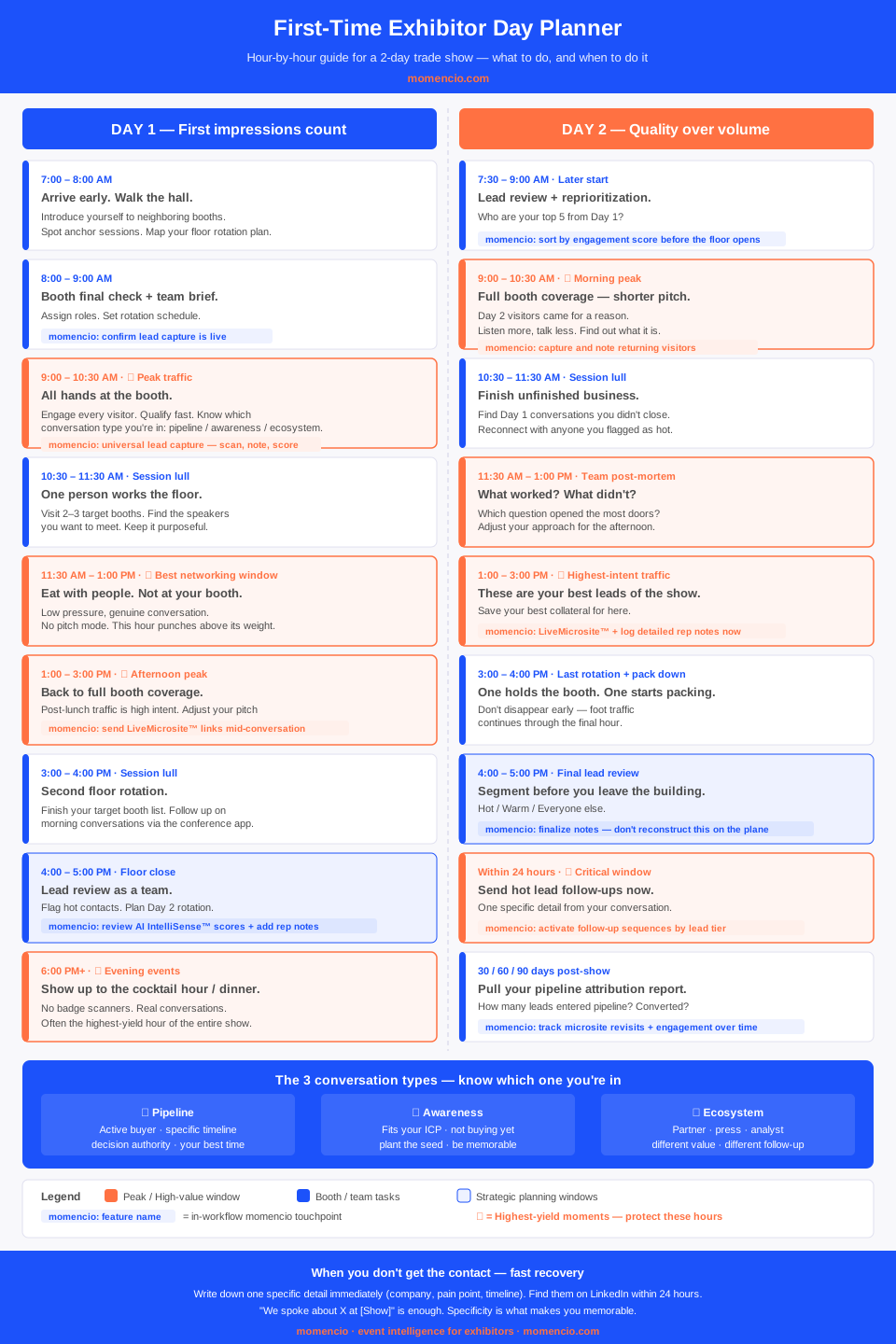
- Set a later start for floor duty on day two. Use the first hour for lead review and reprioritization.
- Rotate your team earlier and more frequently. Fatigue shows in your face before you feel it.
- Cut the pitch shorter on day two. People are tired too. Respect their time more, not less.
- Save your best collateral for day two follow-ups — the people who come back warrant more than a brochure.
Day two is also when you start doing informal post-mortems. Before the floor closes, spend twenty minutes with your team asking: what conversation type dominated? What question opened the most doors? What do you wish you’d done differently on day one? These aren’t just retrospective — they’re prep for the next show.
Post-show: what to do in the first 24 hours
The show ends. You pack up. You’re exhausted. And the temptation to let the follow-up wait until you’re back in the office — which often means until Thursday of the following week — is enormous.
That gap is where leads go to die.
The first 24 hours after a trade show are the highest-leverage window in your entire event investment. Every conversation is still fresh — for you and for the people you met. Your follow-up arriving the next morning is the difference between being remembered and being indistinguishable from the stack of cards they’re sorting through on Monday.
Prioritize before you personalize. You don’t have time to write twenty individual emails in the first 24 hours. But you can segment: hot leads get a personal email. Warm leads get a personal email with a shared resource. Everyone else gets a timely but templated touch that still references something specific.
The reference to something specific is not optional. “Great meeting you at [Show]” is not follow-up. “Following up on our conversation about your Q3 evaluation timeline — here’s the resource I mentioned” is follow-up.
momencio’s lead capture workflow is built for exactly this moment — your reps exit the show with leads already segmented by engagement score, conversation notes attached, and follow-up sequences ready to activate. The first 24 hours become execution, not reconstruction.
For a full breakdown of what good post-show follow-up looks like, these post-event follow-up email strategies are the most practical resource we’ve put together.
How to know if it was worth it
This is the question most first-time trade show exhibitors are afraid to ask honestly, because they’ve spent significant budget and want the answer to be yes.
The honest answer requires honest measurement — and most first-time exhibitors don’t have a baseline. You can’t assess ROI without knowing what you were measuring against.
Before your next show, set these benchmarks in advance:
- Lead volume: How many captured contacts? Not impressions, not booth visitors — contacts with enough information to follow up.
- Conversation quality: Of those contacts, how many were pipeline conversations? How many were awareness? How many were ecosystem?
- Follow-up rate: What percentage of your leads got a personalized follow-up within 48 hours?
- Pipeline contribution: How many leads from this show entered your pipeline within 30 days?
- Closed revenue: How many converted within 90 days? Within 180 days?
The 90-day number is the one that matters most — and the one most exhibitors never track, because by the time it lands, the show is three months in the past and attribution has blurred.
Set up the tracking before you go. Tag every lead with the show name and date. Create a pipeline stage that identifies event-sourced contacts. Build a simple report that you pull at 30, 60, and 90 days.
This is the infrastructure that turns a one-time experiment into a repeatable strategy. If you don’t track it, you can’t improve it — and you can’t justify the budget for the next one.
For a practical framework on building this into your pre-show prep, building a lead pipeline for your next trade show walks through the setup from scratch.
The floor is a skill. Your first show is practice.
Every experienced exhibitor you see working a trade show floor with confidence learned to do it somewhere. Their first show looked a lot like yours will: slightly chaotic, occasionally brilliant, full of things they’d do differently next time.
The difference is that the good ones paid attention. They tracked what worked. They improved the follow-up. They built systems that made the second show better than the first.
That’s the real edge — not a better booth or a bigger budget. It’s treating every event as a dataset and building on it deliberately.
momencio is built for exhibitors who are serious about that process — capturing leads with context, following up with precision, and measuring what the show actually produced. If you’re heading into your first show and want to start with the right infrastructure, see how momencio supports the full event cycle.