
A rep gets back from a show with two hundred records. Around fifteen are obviously worth a call. Another thirty or so are plausible. The rest are somewhere between polite conversation and a scanned badge attached to a person who wanted the tote bag.
Every piece of advice available tells that rep to move fast. Nothing tells them when to stop.
So they decide privately, and the decision is usually made through attrition rather than judgment. They work the obvious ones, send a couple of rounds to the middle group, get busy with the quarter, and by week five the list has quietly become something nobody opens. Some genuinely good leads are sitting in there. Nobody knows which.
This covers the part of the process the category refuses to write about. Not how fast to follow up, but how long to keep going and what should happen when you stop.
Where the follow-up urgency advice actually comes from
Almost every statistic you have read about follow-up speed traces back to one study.
In 2007, Dr James Oldroyd at MIT Sloan, analyzed three years of data across six companies covering more than 15,000 leads and over 100,000 call attempts. The headline finding is the one everybody quotes: the odds of contacting a lead if called in five minutes versus thirty minutes drop by a hundred times, and the odds of qualifying drop by twenty-one times.
A separate Harvard Business Review study audited 2,241 US firms and found the average first response took around 42 hours, with 23% never responding at all.
Both are solid research and neither is about your situation. They studied inbound web leads, where somebody filled in a form minutes ago and is actively shopping. The unit of measurement is minutes. The person has no relationship with you and their intent is at its absolute peak the second they hit submit.
A booth conversation is a different object. You have met. They have seen the product and spoken to a human. Their intent is usually lower at the moment of capture and their memory of you is far higher, and both of those decay on a timescale of weeks rather than minutes.
The industry took a finding about five-minute response windows for web forms and applied it to conversations that happened in person. That is why every article ends at the 48-hour mark and none of them go further.
There is one finding from that same study that almost nobody quotes, and it is the most useful one here. After roughly twenty hours of attempts, additional calls actually reduced the probability of contact. The researchers attributed it to irritation and pattern avoidance.
Persistence has a turning point. It exists for event leads too, just further out.

What actually changes, and when
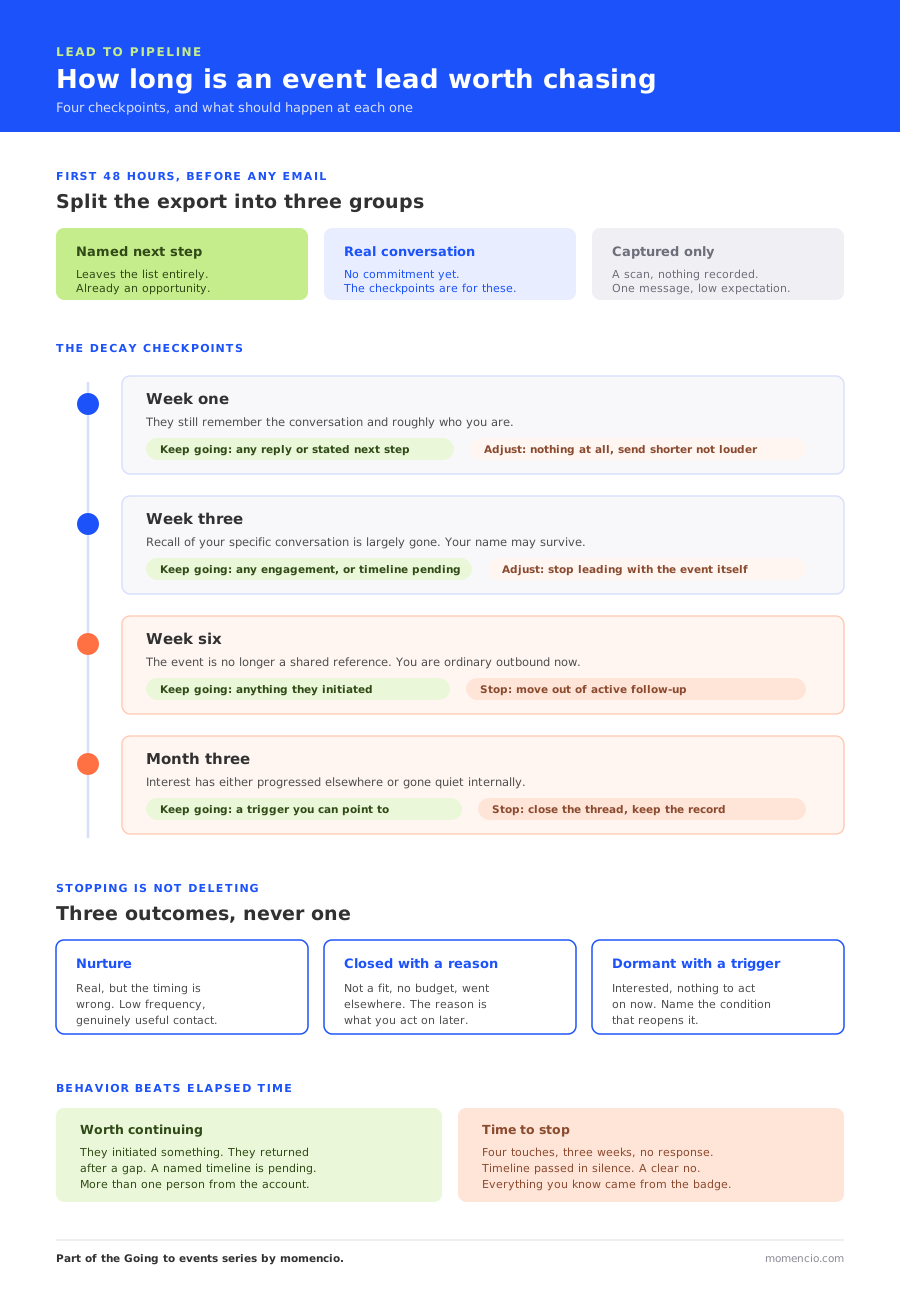
Four checkpoints matter. They are not rules about when to send emails. They are moments to decide whether this person is still worth active effort.
| Checkpoint | What has changed | Keep going if | Change approach if |
| Week one | They still remember the conversation and roughly who you are. | Any reply, any engagement with what you sent, or a stated next step from the booth. | Nothing at all. Send a second, shorter message rather than repeating the first. |
| Week three | Recall of your specific conversation is largely gone. Your name may survive. | They engaged even passively, or the timeline they described has not arrived yet. | Two touches with no response. Stop referencing the booth and lead with something useful instead. |
| Week six | The event is no longer a shared reference point. You are ordinary outbound now. | Anything they initiated, or a date they gave you that is now close. | Still nothing. This is the point to move them out of active follow-up. |
| Month three | Any interest they had has either progressed with someone else or gone quiet internally. | A trigger you can point to, such as a role change, funding, or renewed activity. | No trigger. Close the active thread and keep the record. |
Read that table as a decision sequence rather than a schedule. The question at each point is not have I followed up enough, it is do I still have a reason to believe this will go somewhere.
Why week three is the one people get wrong
Week one is easy because everything is fresh. Month three is easy because the lead is obviously cold.
Week three is where most good leads are lost, and the mechanism is specific. The rep is still writing as though the booth conversation is a shared reference point, and the prospect no longer remembers it clearly enough for that to work. So the message opens with a reminder of where you met, which reads as a request to be remembered rather than as something useful.
At week three, stop leading with the event. Lead with the thing they cared about. If they raised a problem at the booth, send something about that problem and mention the show at the end or not at all.
Sort the list before you start, not after
One thing makes all four checkpoints work better, and it happens before the first email goes out.
Most teams treat the export as a single list and work down it. Two hundred records get roughly the same treatment, which means the fifteen real opportunities get the same attention as the person who wanted the tote bag. By the time the list has thinned enough to see clearly, three weeks have passed.
Split it into three groups within forty-eight hours of the show closing, while somebody still remembers the conversations.
- Named next step. They agreed to something specific. A call, a demo, an introduction to a colleague. These are not leads and should leave the list entirely.
- Real conversation, no commitment. You spoke properly, they showed interest, nothing was agreed. This is the group the checkpoints in this article are built for, and it is usually the largest.
- Captured only. A scan, a business card, a thirty-second exchange with nothing recorded. Send one message and set the expectation internally that most of these will go nowhere.
The sorting is the difference between a rep working fifty leads properly and two hundred badly. It also makes the stop decision far easier later, because a lead in the third group with no response at week three needs no deliberation at all.

Do this as a group rather than individually. The person who had the conversation is not always the person who will follow up, and forty-five minutes with everyone in a room recovers context that would otherwise never reach the record.
Signals that justify keeping someone active
These are worth more than any elapsed time calculation. A lead with any of these is worth continued effort at week eight. A lead with none of them is probably not worth effort at week two.
- They initiated something. A reply, a question, a forwarded introduction, a calendar click. Anything they started rather than received.
- They came back to your material more than once, particularly after a gap of several days. A single open on the day you sent it means much less than a return visit the following week.
- They named a timeline that has not arrived yet. Somebody who said they were reviewing this in the new year is not cold in November, they are early.
- More than one person from the same company appeared. Multiple contacts from one account is a different signal entirely from one person twice.
- They asked something specific enough to be inconvenient. Questions about data residency, contract terms, or migration effort are not casual questions.
Notice that four of these are things the prospect did rather than things you did. That is the point. Your own follow-up activity tells you nothing about whether a lead is alive, which is why counting touches is a poor way to decide.
Signals that mean stop
Equally worth naming, because reps rarely feel permitted to conclude this.
- Four or more touches with no response of any kind, across at least three weeks. Not four emails in one week, which is a different problem.
- The person you met has left the company and nobody at the account has engaged.
- They told you a timeline and it passed without any movement or acknowledgment.
- They gave a clear no. This should not need saying, and it does, because a surprising amount of follow-up continues past an explicit decline.
- Everything you know about them came from the badge rather than the conversation. A scan with no notes and no engagement was never a lead in the first place.
If two or more apply, stop. Continuing past this point is not persistence, it is the behavior the Oldroyd study found actively reduces your chances, and it costs you time you could spend on the fifteen records that were always the real opportunity.

Stopping is not deleting
This is where most teams handle the endgame badly, and it is entirely fixable.
When a rep decides a lead is done, one of two things usually happens. Either the record sits in an active queue forever, quietly inflating the pipeline and making the next event look worse than it was, or it gets marked unqualified and effectively disappears.
Neither is right, because stopping active pursuit and writing somebody off are different decisions that have been collapsed into one field.
Three outcomes are more useful.
- They are real and the timing is wrong. Low-frequency, genuinely useful contact. This is where most of the middle group belongs and it is chronically underused.
- Closed with a reason. Not a fit, no budget, went with someone else, left the company. The reason matters more than the closure, because reasons aggregate into something you can act on when planning the next show.
- Dormant with a trigger. Interested but nothing to act on now. Set the specific condition that would reopen it, such as a funding round, a leadership change, or the timeline they mentioned arriving.
The record stays either way. Deleting event leads destroys the only history you have of an account that has been circling you, which becomes the problem the next time they show up.
The leads worth reopening at your next show
Here is the argument for keeping every record even after you stop chasing it.
Most B2B buying cycles run longer than the gap between your shows. The account that went quiet in March is frequently walking the same floor next year, at a later stage, having spoken to your competitors in between.
If your closed-out leads are searchable, that becomes an advantage. Before the next show you can pull every account you stopped pursuing, check which of them are attending, and go into those conversations knowing exactly what was said last time and why it stalled.
That is a materially better position than meeting them as a stranger, and it is only possible if stopping meant closing the thread rather than erasing the record.
It also reframes the whole question. A lead you stop chasing in week six is not a failure. It is a lead you are pausing until you have a reason to restart, and the next show is often that reason.
The short version
Follow up fast, because that part of the advice is correct. Then check at week one, week three, week six, and month three, and at each point ask whether anything the prospect has done justifies continuing.
Behavior beats elapsed time. Stop when the signals say stop rather than when you get bored or busy. And when you stop, close the thread properly with a reason, because you will want that record the next time they walk past your booth.
Stop letting high-intent booth conversations rot in a spreadsheet—book a demo with momencio to give your sales team real-time engagement signals and clear follow-up workflows.
Frequently asked questions
- How many follow-up attempts is too many?
- There is no universal number, but four touches across three weeks with no response of any kind is a reasonable ceiling for a lead showing no other signals. A lead that is engaging can absorb far more.
- Should hot, warm and cold leads follow different timelines?
- Yes, though not in the way most teams apply it. The checkpoints are the same for everyone. What differs is how much evidence you need at each checkpoint, and a lead you rated hot at the booth with no engagement since is a more urgent problem than a cold lead behaving as expected.
- What if a lead responds at month four?
- Treat it as new inbound rather than a continuation. They are coming to you with fresh intent, and referencing a conversation they have forgotten only makes the exchange awkward.
- Does this apply to leads who booked a meeting at the show?
- No. A booked meeting is an opportunity rather than a lead and it belongs in your normal sales process from day one. This is about the unqualified middle of the list.
- How do we stop reps quietly abandoning leads instead of closing them?
- Make closing easier than ignoring. If marking a lead nurture or closed with a reason takes one click, reps will do it. If it takes a form with six required fields, the list will keep rotting instead.
- What should we tell leadership about leads we stopped chasing?
- Report them by reason rather than as a single unqualified number. Not a fit and wrong timing carry completely different implications for how you pick and work the next show, and collapsing them into one figure hides the only useful part.