
The booths that consistently generate pipeline from trade shows are not the ones with the biggest footprint or the loudest activation. They are the ones that arrive with a full calendar.
This is not a new observation. It is, however, one that most exhibitors fail to act on. CEIR research shows that 81% of B2B exhibition attendees hold buying authority, yet a large share of exhibitors still arrive on the show floor with no pre-booked meetings, hoping the right people will walk past the booth. Hope is not a pipeline strategy.
Filling your calendar before the show opens is the single highest-leverage thing a field marketing or sales team can do to improve event ROI. It is also the thing most exhibitors treat as optional. This article walks through how to do it properly, what meetings are actually worth filling the calendar with, where to source names when you do not have an attendee list, and what to do in the final 72 hours before the doors open.
TL;DR
How do you fill your event calendar before a trade show? Identify the right meeting types (check the table below), start outreach 6 to 8 weeks out for senior targets and 3 to 4 weeks for mid-level, source names from your own CRM and public signals, and run a multi-channel cadence with a specific reason to meet.
Why the pre-booked calendar is a pipeline metric, not a logistics one
Most event teams measure pre-show outreach the way they measure email campaigns: open rates, reply rates, meetings booked. These numbers are useful, but they are inputs, not outcomes.
The real metric is weighted pipeline walked into the show. That is, the sum of expected deal value across every pre-booked meeting, adjusted for the probability of progression. A single meeting with the CIO of a Fortune 500 account already in late-stage evaluation is worth more than 30 walk-ups with unqualified badge scanners. Your calendar should reflect that.
Framing the calendar this way changes how the work gets done. It moves pre-event outreach out of marketing’s inbox and into a shared responsibility between marketing, SDRs, and account executives. It forces teams to think about mix, not volume. And it produces a number that leadership can actually evaluate against event spend.
What a full event calendar actually means (and what it does not)
“A full calendar” does not mean 40 back-to-back meetings for four days straight. That is a schedule designed to burn out your team and produce shallow conversations. A genuinely productive event calendar contains a deliberate mix of meeting types, each sourced and scheduled with different logic.
There are four meeting types worth filling your calendar with. Most teams only think about one.
The four meeting types
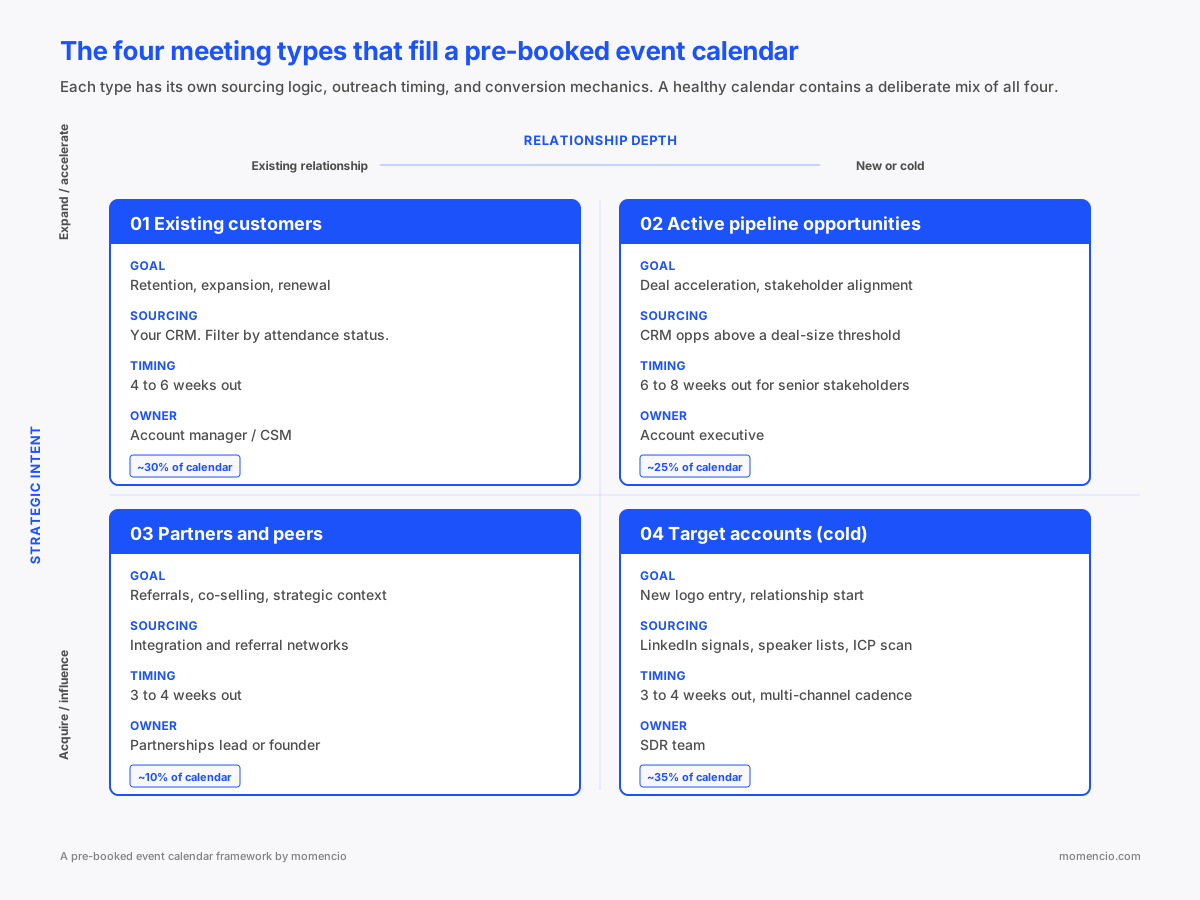
Existing customers are the highest-converting meetings on any event calendar. These conversations are about retention, expansion, and renewal. The sourcing is free because you already have the relationship. The outreach is warm. The outcome is measurable in account revenue lift. If you are not using the show to book time with every current customer who is attending, you are leaving the cheapest pipeline on the table.
Active opportunities in pipeline are the second-highest-converting segment. These are prospects who are already in a sales conversation and are attending the show. A face-to-face meeting at the event can compress weeks of the deal cycle. For any opportunity above a threshold value, say 50% of your average deal size, the event is a deal acceleration mechanism. Your AEs should be the ones scheduling these meetings, not your SDR team.
Target accounts not yet engaged are where most of the cold outreach energy gets spent, and where expectations should be calibrated. Both reply and conversion rates will be lower than for warm segments, but the ceiling is high. A single new enterprise relationship started at a show can justify the event spend on its own. This segment is what SDRs should own end-to-end.
Partners, referrers, and peer relationships are the meeting type almost nobody plans for. Industry peers, integration partners, referral sources, and adjacent-category vendors are all concentrated at the same events. Thirty minutes of coffee with a well-placed partner can produce more pipeline over the following year than a full day of booth conversations. These meetings rarely make it onto the calendar because nobody owns them. Assign someone.
A healthy calendar has representation from all four. A common rough mix for a three-day B2B show: 30% existing customers, 25% active pipeline, 35% target accounts, 10% partners. Adjust based on your stage of company and deal cycle.
When to start, honestly
Every source on pre-show outreach prescribes a different window. Some say two weeks, some say four to six, some say six to eight. The truth is the right window depends on two things: the seniority of the people you want to meet, and the size of the event.
Senior buyers plan their event calendars early. VPs and C-suite attendees at a major industry show often have their week effectively locked six to eight weeks out, if not earlier. If your meeting targets are director-level and above, you need to start outreach at that window or you will be fighting for the leftovers.
Mid-level and individual-contributor attendees plan much later. For this segment, three to four weeks out is the sweet spot. Earlier than that and your message gets filed. Later than that and their slots are gone.
Event size matters because large shows compress attendee calendars. A 50,000-person industry event means everyone there is getting pitched by every exhibitor. Smaller, regional, or vertical-specific events have more breathing room in attendee schedules, and outreach timing can be tighter.
The practical approach: build a tiered sequence. Identify your highest-value, highest-seniority targets six to eight weeks out. Identify your bulk outreach list three to four weeks out. Run a final confirmation pass in the week leading up to the show. This layered approach gets you meetings with the people most worth meeting without burning the list on premature outreach.
Where the names come from when you do not have the attendee list
A lot of pre-show advice assumes the exhibitor has the full attendee list. In reality, event organizers rarely share this before the show. Sometimes they sell partial lists to sponsors. Sometimes they release it after the show, when it is too late to use. Teams that fill calendars consistently do not wait for organizer data. They build their own picture of who is attending from five sources.
- Your own CRM, filtered by ICP and attendance history
Past-show attendees from your own database are the highest-yield list you will ever have for pre-show outreach, and most teams never mine it. If your lead capture and event history are tied together in a single system, you can pull every contact who attended the same event in prior years and has not yet become a customer. That list is gold. Platforms like momencio keep this interaction history attached to the contact record automatically, so a pre-show export becomes a five-minute job rather than a manual reconstruction.
- LinkedIn self-announcement
A surprisingly large percentage of senior attendees post publicly that they will be at the event. Searching LinkedIn for the event name and hashtag three to six weeks out surfaces a live list of people who have raised their hand. These posts also make outreach frictionless. You can reference exactly what they said, which dramatically lifts reply rates compared to generic “saw you are attending” openers.
- The speaker, sponsor, and panel list
These are published on the event website well before the show. Every speaker is attending. Every sponsor has senior representatives there. Panel moderators are networking hubs. This list alone can fill a calendar for most B2B teams.
- Session registrations where visible
Some event platforms show which sessions people are planning to attend. If your ICP is signaling interest in a specific topic by registering for a session, that is a high-fit outreach trigger.
- Partner overlap
Ask your integration partners, referral partners, and existing customers who else from their network is attending. A warm introduction beats a cold email every time, and partners are usually willing to facilitate.
Notice what is not on this list: buying attendee data from a third-party provider. These services exist and can produce volume, but the data quality is uneven and the outreach reply rates tend to be poor because the contact has no reason to recognize you. Use them only as a supplement, not as the foundation of your list.
The outreach that actually gets replies
Most pre-show email sequences read identically. Announce your presence. Describe what you are showing. Ask for a meeting with a calendar link. Send follow-ups three days apart. The templates are everywhere. So is the mediocre reply rate.
What separates the teams who fill their event calendars from the teams who do not is not the email template. It is three practices.
- Multi-channel, not single-email
A single email at a cold contact converts at a low single-digit rate. A coordinated sequence of email, LinkedIn, and a short phone call converts at multiples of that. The best-performing cadences touch each target across at least two channels, with messages that build on each other rather than repeat.
- A specific reason to meet, not a calendar link
“Would love to meet up at the show” is not a reason. “We have a new benchmark on [specific problem they have] and I would like to walk you through the data in person” is a reason. The outreach has to answer the question your target is silently asking: why is 20 minutes of my already-packed event schedule worth giving you? Do the work of answering that question before you send.
- A booth time AND an off-floor option
Senior buyers often do not want to meet in your booth. The booth is loud, visible, and puts them on display as a prospect. Offering both a booth slot and a quieter option, such as a coffee before the floor opens, a 15-minute slot at your hotel suite, or a short walk to the closest café, doubles your meeting acceptance rate with senior targets. Lead with the quieter option for decision-makers. Lead with the booth slot for information-gathering contacts.
A practical cadence for a four-to-six-week outreach window:
Week one: LinkedIn connection with a personalized note referencing something specific about the prospect. No ask.
Week two: A short email with your reason to meet and two proposed times. Direct calendar link included.
Week three: A LinkedIn message or reply-in-thread email referencing a new piece of context, such as new research, a new customer story, or a speaker session you will both be at.
Week four: A short, honest nudge. “Wanted to check one more time before your schedule fills up.”
Final week: Confirmations only. Any target who has not responded by this point is unlikely to convert cold. Move them to post-show nurture.
The 72 hours before the doors open
Most teams stop thinking about the calendar once meetings are booked. This is where a meaningful percentage of meetings die.
The 72 hours before the show opens is when you determine whether the pre-booked calendar produces pipeline or produces polite introductions. Four pieces of work matter.
- Brief every rep on every meeting
Every scheduled meeting should come with a one-page brief: who they are, what their company does, where they sit in the pipeline (if they do), what they are likely interested in, what the goal of the conversation is, and what next step to push for. If the meeting is with a pipeline account, the brief should include the current deal stage and the specific blocker the meeting is meant to unblock. This is where momencio’s universal lead capture system pays off. Contact history, past engagement, and content views are already tied to the record, so the brief builds itself rather than requiring a rep to reconstruct it from scratch.
- Confirm every meeting 24 hours out
A polite confirmation message, not another pitch, just a time and location reminder, lifts show-up rates meaningfully. For high-value meetings, a text rather than an email is more effective.
- Pre-stage assets per meeting
If you know a prospect is interested in a specific product line, use case, or outcome, have the exact collateral ready before they sit down. Nothing kills a scheduled meeting faster than a rep fumbling through a shared drive while the prospect watches. Content should be loaded onto whatever device your rep is using, and ideally ready to send as a personalized follow-up the moment the conversation ends.
- Plan for no-shows
A 20 to 30% no-show rate on pre-booked event meetings is normal. Do not leave those slots empty. Have a standing list of walk-up candidates, including booth visitors, session attendees, and partner referrals, that reps can convert into the newly-open slot. A no-show becomes a backfill opportunity, not a wasted hour.
What to do with the calendar during the show
A pre-booked calendar is a starting position, not a fixed plan. The best-performing teams treat the show itself as a live re-prioritization exercise.
Build buffer time into every rep’s calendar, at minimum 30 minutes between meetings, and at least one two-hour walking block per day. The buffer is not idle time. It is where your reps walk the floor, follow up on signals from earlier meetings, and have the conversations that were not scheduled but produce the best pipeline.
If a pre-booked meeting produces a strong signal, such as a specific ask, a serious question about pricing, or a request to bring in another stakeholder, the rep should be empowered to rearrange the rest of their day around that thread. A scheduled coffee with a lukewarm prospect is worth less than an immediate follow-up with a hot one. Give reps permission to triage live.
Use the show itself to capture walk-up meeting requests and route them back into the calendar. Platforms like momencio’s event dashboards make this visible to the whole team in real time, so managers can see where the day is producing pipeline and where reps have capacity to take on new conversations. Without that visibility, walk-up opportunities get dropped because the person who would have taken the meeting is stuck at a different part of the booth.
The compounding return
The thing almost no article on pre-show outreach mentions: this practice compounds.
The first time a team fills the calendar properly, it is hard. The list is incomplete. The outreach templates are untested. The meeting briefs are built manually. Reply rates are mediocre. Even so, the team walks in with a better calendar than they have ever had before.
The second event, the list is richer. Prior-year attendees are already in the CRM. The outreach templates have been tested. Reps know what briefing format actually helps them. Reply rates climb.
By the fourth or fifth event, the practice runs with meaningfully less effort and meaningfully better results. The team has a permanent event-ICP list. Past-show contacts re-engage at higher rates because the relationship is warm. Meeting-to-pipeline conversion climbs as rep briefing gets sharper. The per-event ROI on the program bends upward, not because any one show suddenly performs better, but because the inputs compound.
This is why treating the calendar as a pipeline KPI, not a logistics task, matters. Logistics improves one show at a time. A compounding pipeline practice improves your entire event program, year over year. That is where real event ROI lives. Not in any single booth, but in the operating discipline that makes every booth measurably better than the last one. For a fuller view of how this fits into the broader measurement picture, our guide on how to measure real event sales outcomes walks through the full frame.
Frequently asked questions
- How many meetings should I aim to pre-book for a three-day B2B trade show?
- A reasonable target for a team of three reps is 20 to 30 pre-booked meetings across the three days, spread across the four meeting types (existing customers, active pipeline, target accounts, partners). Leave at least 40% of rep time unbooked for walk-ups, follow-through, and live re-prioritization.
- When should I start outreach for pre-show meetings?
- For senior targets (director and above at large enterprises), six to eight weeks out. For mid-level targets, three to four weeks out. Large events compress attendee calendars, so start earlier for any major industry show.
- How do I find attendee contact information without the organizer’s list?
- Five sources: your own CRM filtered by ICP and past-event history, LinkedIn self-announcements from the event, the published speaker and sponsor list, visible session registrations, and partner overlap. Start with your CRM. It is almost always the highest-yield source.
- What is a realistic reply rate for pre-show cold outreach?
- Single-channel cold email typically sees low single-digit reply rates. A well-executed multi-channel cadence (LinkedIn plus email plus a short call) with a specific, non-generic reason to meet can reach double digits. Warm targets (past customers, prior-event attendees) reply at significantly higher rates.
- Should I meet prospects at my booth or somewhere else?
- For information-gathering targets, the booth works. For senior decision-makers and active pipeline meetings, offer an off-floor option such as a quieter coffee meeting, a hotel suite slot, or a short walk. Senior buyers often prefer not to be seen as prospects on the floor, and a quieter setting produces deeper conversation.
- How do I handle no-shows for pre-booked meetings?
- Expect 20 to 30% no-shows as normal. Do not leave the slots empty. Build a standing list of walk-up candidates, including booth visitors, session attendees, and partner referrals, that reps can convert into the newly-open time. Use the buffer to unblock other meetings.
The calendar you walk in with determines the pipeline you walk out with
The booths that produce pipeline are the ones that arrive with conversations already scheduled, reps already briefed, and assets already staged. momencio gives exhibitors the infrastructure to turn pre-booked meetings into measurable pipeline by connecting contact history, live rep activity, and post-show follow-up into one system. Book a quick demo and see how it works for you.